Introduction
As decoloniality becomes an increasingly pervasive term within contemporary curatorial discourse, a critical question emerges: to what extent does its circulation reflect an epistemic shift rather than the consolidation of a new institutional vocabulary?
This article investigates how curatorial practice operates within decolonial thought—not simply as a field of representation, but as a methodological site in which the conditions of knowledge production, the formation of aesthetic canons, and the attribution of artistic value can be reconfigured. Curatoriality is understood here in an expanded sense, encompassing the dispositifs of representation and visibility that structure the art system—from exhibition-making to museographic and narrative frameworks—through which artworks are made legible and aesthetic imaginaries are produced and circulated. This expanded understanding is developed in dialogue with recent theorizations of “the curatorial” as a category distinct from curating understood as professional exhibition-making. If, as Jean-Paul Martinon and Irit Rogoff have argued, the curatorial names the event of knowledge that takes place on the stage that curating sets up, curatoriality is mobilized here to interrogate the epistemic infrastructures—museographic, narrative, and institutional—within which that event occurs (Martinon 2013; Rogoff 2013). Beatrice von Bismarck’s notion of the “curatorial condition” further specifies this field, foregrounding the relational dynamics of presentation through which positions, roles, and hierarchies are assigned to the human and non-human participants of curatorial situations (von Bismarck 2022). Paul O’Neill’s account of the consolidation of curatorial discourse since the late 1980s offers a further point of reference, as it describes precisely the dynamic this article examines in relation to decolonial vocabulary: the absorption of critical positions into a shared professional culture (O’Neill 2012).
While the growing prominence of decolonial discourse reflects an important recognition of colonial legacies and epistemic asymmetries, its institutionalization has also generated a tension. As decolonial language circulates across exhibitions, research, and institutional programs, it risks functioning as a shared professional vocabulary without necessarily transforming the structures it seeks to challenge.
In this context, decoloniality is approached not as a fixed framework or thematic category, but as a methodological orientation. The distinction between decoloniality as discourse and as method thus becomes central: while the former often operates at the level of representation, the latter requires a reconfiguration of the epistemic conditions that shape cultural authority and determine what can be seen, said, and known.
This article argues that moving beyond colonial frames requires not only expanding representation, but interrogating the genealogies through which aesthetic canons and epistemic hierarchies have been historically constituted and naturalized. From this perspective, contextual curating is proposed as a decolonial research method grounded in situated and relational processes, rather than in externally applied interpretive frameworks.
Contextual curating is a concept developed by the author within a broader research trajectory—first articulated in a doctoral dissertation defended at the Université Paris 1 Panthéon-Sorbonne in 2025, and subsequently at the center of the forthcoming monograph Le Paradigme Contextuel—of which this article offers a condensed articulation oriented specifically toward decolonial method (Valentina Gioia Levy, 2025; Valentina Gioia Levy, 2026, forthcoming). It designates a mode of curatorial practice that treats the artwork not as an autonomous object, but as intrinsically embedded within the conditions—spatial, historical, social, cultural, and political—of its production, reception, and circulation; that proceeds through processes of co-creation among artists, curators, and communities rather than through externally applied interpretive frameworks; and that, in doing so, redistributes epistemic authority, repositioning the curator as a situated agent operating within a network of relations rather than as a central figure of interpretation and legitimation. The term is elaborated in dialogue with the plural genealogy of “contextual art”—from Jan Świdziński’s 1976 manifesto to Peter Weibel’s parallel reflection, resumed in the 1990s, and Paul Ardenne’s theorization of an art contextuel, with further echoes in the social history of art—a constellation that the author’s monograph frames as a “contextual paradigm” rather than as a single lineage (Świdziński 1976; Weibel 1994; Ardenne 2002). Contextual curating displaces this genealogy toward an explicitly decolonial horizon: context is assumed not merely as a condition of display, but as the very ground on which knowledge, value, and legitimacy are produced. The sections that follow mobilize this lens throughout: first to reread key exhibitions through which decolonial concerns entered European institutions; then to trace the intra-European genealogies through which the canon was constituted precisely by severing artworks from their contexts; and finally to articulate contextual curating as a method through practices that reverse that operation.
Crucially, the article extends this inquiry beyond the conventional North–South divide by examining forms of epistemic asymmetry within Europe itself. By tracing intra-European dynamics of appropriation, the formation of a “classical canon” and the construction of a Southern European “other,” it shows how these processes unfolded alongside colonial expansion as part of a shared logic of epistemic hierarchization. The European South, the article argues, functioned in this respect as a laboratory of coloniality: a site in which mechanisms of aestheticization, temporal distancing, and epistemic displacement were rehearsed before being extended to extra-European contexts. Within this framework, contextual curating is articulated not as a universal model, but as a situated approach capable of displacing the conditions under which knowledge is produced, interpreted, and made visible, repositioning curatorial practice as a site of epistemic redistribution.
From Representation to Epistemic Inquiry: Decoloniality in European Exhibition Practices
The year 1989 marked the bicentenary of the French Revolution, a foundational moment in the consolidation of modern political thought and of the universalist values associated with Enlightenment philosophy. The revolutionary affirmation of the “reason” of the people against an absolutist and centralized regime has long been framed as a decisive rupture, inaugurating new conceptions of political subjectivity, citizenship, and collective agency. As a symbolic milestone, the bicentenary functioned not only as a national commemoration, but also as a broader celebration of the ideological foundations of modern Western civilization, whose universalist aspirations were presented as both historically grounded and globally transferable.
It is within this context that Les Magiciens de la Terre (1989) was conceived. The exhibition is often considered a key moment in the entry of decolonial concerns into European museum institutions, insofar as it explicitly sought to challenge the Eurocentric limitations of modern art by bringing together artists from across the globe on an ostensibly equal footing. Yet, precisely because of the historical and ideological framework within which it emerged, the exhibition reveals the tensions inherent in attempts to expand representation without fundamentally displacing the epistemic structures that define artistic value and visibility. The curator, Jean-Hubert Martin, explicitly positioned the exhibition as a corrective to the Western-centric canon, aiming to present contemporary artistic practices from different cultural contexts without hierarchical distinction. By juxtaposing Western and non-Western works within a shared exhibitionary space, Martin sought to reveal formal and aesthetic correspondences across cultural contexts, suggesting the possibility of a shared artistic language. However, rather than displacing the universality of modern art, this approach tended to reaffirm it, insofar as difference was rendered legible through criteria rooted in Western aesthetic perception.
As pointed out by Pablo Lafuente, the history of Les Magiciens de la Terre can be understood as a history of representation—of inclusion, integration, and incorporation, but also of appropriation and, at times, co-option. In this sense, the exhibition does not simply mark an expansion of the artistic field, but reveals the complex and often unresolved dynamics through which non-Western practices are brought into visibility within frameworks that remain structurally Western (Lafuente 2013).
It is precisely in response to the limits exposed by this exhibition that one of its participating artists, the Pakistani-born artist and curator Rasheed Araeen, organized, in the same year, The Other Story: Afro-Asian Artists in Post-War Britain (1989–90) at the Hayward Gallery in London. Conceived as a critical intervention, the exhibition sought to address not only the systematic exclusion of Asian, African, and Caribbean artists from dominant narratives of British modern and contemporary art, but also the terms under which inclusion itself was being negotiated within Western exhibitionary frameworks.
While often read as a counterpart to Martin’s project, The Other Story operated through a fundamentally different curatorial logic. Araeen aimed to counter the primitivist and exoticizing aesthetics reinforced within postmodern discourse, foregrounding artists as fully contemporary subjects shaping artistic production in post-war Britain, while restoring agency to those who had been systematically marginalized within dominant narratives. As the curator himself noted, the exhibition responded to the racism, inequality, and ignorance of other cultures that permeated late-Thatcherite Britain in the 1980s, exposing the structural biases embedded within both art institutions and art historical discourse (Araeen 1989; Mercer 1994).
Araeen’s position contrasts with Les Magiciens de la Terre, where the expansion of visibility was often accompanied by a curatorial asymmetry. While Western participants were selected as artists recognized within the contemporary art system, non-Western contributors were, in several cases, included through forms of creative production not necessarily acknowledged as contemporary art within the same field. As Araeen critically pointed out, this approach reflected an implicit expectation that artists from different cultural contexts would produce according to preconceived categories, thereby reinforcing reductive and culturally coded assumptions about artistic practice.
Rather than producing an explicit distinction, the exhibition operated through a form of equivalence that obscured the conditions under which artistic legitimacy is constructed, positioning non-Western subjects within a temporally and epistemically uneven field. The Other Story, by contrast, challenged the very conditions under which visibility is granted, marking an early and significant attempt to address the epistemic asymmetries underpinning the Western art system at the time.
The debates initiated in 1989 demonstrate that visibility alone does not constitute an epistemic shift, as the frameworks that regulate meaning, value, and legitimacy within the exhibitionary field often remain fundamentally unchanged. From this perspective, visibility must be understood not as a neutral condition, but as a paradigm of power—one that determines not only who or what becomes visible, but under which terms, within which interpretive frameworks, and according to which regimes of value. Read through the lens proposed in this article, the 1989 debate already stages the problem to which contextual curating responds: what The Other Story contested was precisely the severing of artistic practices from the contexts—historical, social, and political—within which they had been produced and made meaningful, and their reinscription within an interpretive frame defined elsewhere.
It is precisely at this level that more recent curatorial practices began to interrogate not only the presence of marginalized subjects within the visual field, but the historical and epistemic conditions that shape their representation. In this regard, the curatorial project ReSignifications, developed by Awam Amkpa between 2015 and 2018 across multiple sites, offers a particularly relevant example. The project engages with both historical and contemporary representations of Black subjectivities, examining the visual regimes through which Blackness has been constructed and circulated. By re-reading archival materials and established iconographies through contemporary perspectives, it foregrounds the instability of representation and the possibility of its critical re-signification. In doing so, Amkpa shifts the focus from inclusion to the transformation of the visual and epistemic frameworks through which meaning is produced, perceived, and legitimized (Amkpa 2015–2018).
After 2000, decolonial approaches began to more explicitly permeate the discourse of global contemporary art, with major exhibitions contributing to a critical rethinking of visibility, representation, and curatorial authority. Within this context, the work of Okwui Enwezor marks a decisive moment in the reconfiguration of the exhibition as a site of decolonial inquiry, shifting it from a space of display to one in which the epistemic conditions of visibility, representation, and legitimacy are actively interrogated.
Among his projects, Documenta 11 (Kassel, 2002) represents a significant shift, not only because it was the first time this major European platform was directed by a Nigerian curator, but because it fundamentally redefined the spatial and epistemic structure of the exhibition itself. Widely recognized for its postcolonial orientation and geographic dispersion, the exhibition challenged the centrality of the traditional Euro-American exhibition model. Through its multi-sited “platforms,” developed across locations including Vienna, New Delhi, St. Lucia, Lagos, and Kassel, Documenta 11 displaced the exhibition from a singular site to a transnational and discursive field of engagement, opening it to multiple sites of knowledge production (Enwezor 2002).
Another key exhibition in Enwezor’s trajectory is Intense Proximity: An Anthology of the Near and the Far (Paris Triennale, 2012). Rather than explicitly framing the exhibition through a decolonial discourse, Enwezor’s approach operated primarily at the level of visual strategy. By juxtaposing ethnographic archives with contemporary artistic practices, the exhibition reactivated the anthropological gaze without fully prescribing its interpretation. Works such as From Here I Saw What Happened and I Cried by Carrie Mae Weems function not simply as critiques, but as interventions within the visual regime of the exhibition itself. Rather than producing a didactic discourse on postcoloniality, Intense Proximity foregrounded the conditions of looking, allowing meaning to emerge through the tension between images and positioning the exhibition as a space in which the politics of representation are not explained, but enacted. The critical reception of the exhibition, however, reveals a problematic dimension. As reported by Emmanuelle Chérel, citing Rikki Wemega-Kwawu, Enwezor’s earlier positions were described as “virulent” and “highly belligerent,” in contrast to what was perceived as a subsequent “softening” (Chérel 2016; Wemega-Kwawu 2012).
Such readings implicitly rely on the expectation that a curator operating within a decolonial framework must adopt a visibly confrontational stance in order to remain legible as critical. In this sense, the perception of a “softening” risks reproducing the very normative frameworks it seeks to challenge, projecting onto the figure of the African curator a predefined role marked by discursive militancy. This dynamic recalls earlier critiques articulated by Araeen, who denounced the expectations placed upon Afro-Asian artists to conform to externally defined modes of expression. In both cases, what is at stake is not only representation, but the conditions under which agency itself is recognized and validated.
If Enwezor’s work foregrounds the exhibition as a site in which the visual and epistemic conditions of representation are reconfigured, Simon Njami’s curatorial practice operates through a complementary yet distinct strategy, shifting the focus from regimes of visibility to questions of interpretive authority. In Africa Remix – l’art contemporain d’un continent (2004–2007), Njami reconfigured the exhibitionary field through a curatorial narrative grounded in the diversity and contemporaneity of artistic practices across the African continent. While the exhibition did not explicitly frame its approach through the language of decoloniality, it was accompanied by a series of conversations titled “Postcolonial Studies en débat,” which provided a broader discursive context for engaging with postcolonial thought. Rather than framing African art through a postcolonial framework or through ethnographic and essentializing categories, Njami foregrounded a perspective articulated from within, organizing the exhibition around thematic fields shared across global contemporary experience. His approach did not aim to present a didactic discourse on decoloniality, but instead enacted its questions through visual and curatorial strategies, foregrounding the agency of artists to participate in and redefine global aesthetic discourses.
What is at stake, therefore, is not the use of such themes, but the asymmetry that governs their legitimacy. While Western artists are assumed to engage freely with a wide range of conceptual concerns, artists from other contexts are often expected to address a more limited set of culturally prescribed topics. Njami’s curatorial strategy can thus be understood as a refusal of such epistemic confinement. This logic is further extended in The Divine Comedy (2014–2015), where Njami engages directly with one of the foundational texts of the Western canon. Rather than treating Dante’s work as a fixed reference, the exhibition enables African artists to appropriate it as a site of situated and context-specific interpretation. In doing so, it challenges the assumption that canonical works remain epistemically anchored to their original contexts, foregrounding instead the legitimacy of historically marginalized perspectives.
The exhibition thus reveals that canons themselves are not neutral repositories of meaning, but sites of ongoing negotiation, where authority is historically constructed and can therefore be contested and rearticulated.
From Discourse to Practice: Decoloniality as Curatorial Method
Taken together, the projects of Enwezor and Njami not only question the position of curatorial practice in relation to decolonial concerns, but also destabilize the interpretive categories through which non-Western artistic practices—and curators—have been framed. By foregrounding issues of representation, genealogies of visibility, epistemic displacement, and cultural authority, alongside the construction of agency, they reveal how curatorial practice is always already implicated in the production of meaning, the establishment of hierarchies, and the regulation of artistic legitimacy.
At the same time, they unsettle the externally constructed expectations that have often shaped the roles assigned to non-Western artists and—more recently—curators within postcolonial and decolonial discourse, positioning them as representatives of fixed cultural identities or as spokespersons of predefined themes. In doing so, these practices challenge the epistemic frameworks through which agency is recognized and constrained, reasserting both artist and curator as critical subjects capable of operating across multiple, intersecting epistemic and conceptual registers.
To practice decoloniality, in this sense, is not to assign subjects to predefined categories—whether cultural, geographic, or political—but to dismantle the systems of attribution and expectation through which such positions are constructed. It entails not only the critique of inherited epistemic structures, but also the refusal of their reproduction under new conceptual labels. What emerges, therefore, is not simply a diversification of the exhibitionary field, but a growing awareness that the conditions under which artworks are selected, contextualized, and interpreted are themselves situated. Curatorial practice can thus no longer be understood as a neutral or external operation, but must be recognized as a site in which epistemic frameworks are produced, negotiated, and contested.
This position finds a strong theoretical articulation in the notion of the “postcolonial constellation,” as elaborated by Okwui Enwezor, through which contemporary art is understood as operating within a complex field of entangled relations shaped by history, geopolitics, and power. Within such a framework, no neutral or external vantage point can be assumed: the production and interpretation of cultural meaning are always embedded in these relational structures. From this perspective, the curator cannot be conceived as an objective intermediary, but must be understood as a situated agent operating within a field of epistemic and political forces. Enwezor and Njami’s exhibitions thus move beyond the expansion of representation toward a displacement of the gaze and of the observing position, thereby marking a transition from decoloniality as discourse to decoloniality as method (Enwezor 2008).
Building on these curatorial shifts, a subsequent generation of curators—including Bonaventure Soh Bejeng Ndikung and Azu Nwagbogu—has further developed practices that translate decoloniality into operational methodologies attentive to epistemic positioning and the redistribution of cultural authority.
For this generation, the issue is no longer to demonstrate that non-European artists and curators can engage with any thematic or conceptual field—a claim already asserted by earlier practices—but rather to reconfigure the conditions under which they are inscribed within globally shared and urgent concerns. The focus thus shifts from access to discourse toward the transformation of its underlying structures, opening the possibility for non-European artists and thinkers to participate not as representatives of “difference,” but as active agents in the production of contemporary critical thought.
In this regard, Bonaventure Soh Bejeng Ndikung’s notion of “pidginization,” articulated as a curatorial method in his later writings, offers a compelling framework for understanding how linguistic hybridity can function as an epistemic strategy. Drawing from the structure of pidgin languages—formed through processes of contact, negotiation, and transformation—this approach proposes a curatorial practice grounded in translation, relationality, and the refusal of fixed or dominant linguistic frameworks (Ndikung 2023).
While this concept was formalized subsequently, earlier curatorial projects already point toward such a methodological orientation. A relevant example can be found in An Age of Our Own Making (2016), curated by Ndikung in collaboration with Solvej Helweg Ovesen. Structured across three chapters—The Life of Materials, The Route That Tempts the Traveler to Test Gravity, and On Agency and Enacting Citizenship—and unfolding across Holbæk, Roskilde, and Copenhagen, the project explored the entanglements between production, ethics, ecology, migration, and citizenship in the Anthropocene. What is particularly significant in this context is the position from which these questions are articulated. Rather than confining non-European artists to culturally or historically assigned themes, the project foregrounds their engagement with urgent global concerns—not as peripheral perspectives, but as central contributions to contemporary critical discourse. In this sense, the exhibition can be read as anticipating a curatorial logic grounded in translation, negotiation, and the coexistence of heterogeneous epistemologies. Although the exhibition has not occupied a central place in broader decolonial art-historical debates, its structure and methodology make it a particularly significant—if comparatively under-discussed—case of curatorial experimentation.
Similarly, in Everything Precious Is Fragile, presented at the 60th Venice Biennale (2024) as the first national pavilion of the Republic of Benin, and curated by Azu Nwagbogu in collaboration with Yassine Lassissi, the philosophical and performative dimensions of the Yoruba concept of Gẹ̀lẹ̀dẹ́ functioned as a framework through which to interpret the work of four Beninese artists. What is particularly significant in this context is the way in which the exhibition engages with questions commonly framed within global feminist discourse through a culturally specific epistemic lens. Rather than adopting feminism as a universal and pre-defined category, the project rearticulates issues of gender, power, and social relations through the conceptual and performative logic of Gẹ̀lẹ̀dẹ́, thereby producing a situated reinterpretation of a global concern. More importantly, the exhibition does not operate solely within a localized framework, but actively produces forms of knowledge addressed to a global audience. While such epistemic materials have historically been subject to processes of extraction and appropriation, here they are mobilized as the basis for an autonomous production of meaning. In this sense, the exhibition contributes to a reconfiguration of epistemic circulation: rather than functioning as a source to be interpreted elsewhere, it articulates conceptual frameworks that are generated within specific cultural contexts and projected outward, entering global discursive spaces on their own terms.
These practices demonstrate how decoloniality can move beyond discourse to operate as method—through strategies of translation, hybridity, and situated knowledge. Keeping this operational dimension in mind is essential, as decolonial discourse, while gaining prominence within contemporary curatorial and institutional frameworks, has increasingly been absorbed into a shared professional lexicon. Terms such as “decolonizing the museum,” “decolonial exhibitions,” or “decolonial perspectives” now circulate widely across exhibition texts, mission statements, funding applications, and academic research. While this diffusion signals a growing awareness of colonial legacies and power asymmetries, it also raises a critical concern: the risk that decoloniality becomes primarily a discursive marker rather than a transformative epistemic practice.
As Paul O’Neill has shown with regard to the consolidation of curatorial discourse itself since the 1990s, the institutionalization of a critical vocabulary tends to convert oppositional positions into professional currency; decolonial language is today exposed to precisely this dynamic (see O’Neill 2012).
The adoption of decolonial vocabulary, in itself, does not necessarily entail a reconfiguration of the structures through which knowledge is produced, legitimized, and displayed. On the contrary, decolonial language is often mobilized within exhibitionary formats, institutional hierarchies, and curatorial protocols that remain largely intact. In such cases, decolonization risks being reduced to a thematic layer superimposed onto existing frameworks, leaving untouched the deeper epistemic infrastructures inherited from Western modernity, and potentially reproducing the very classificatory logics that historically constrained and circumscribed Afro-Asian artists and theorists. This tension reveals a fundamental distinction between speaking about decoloniality and practicing it as a method of inquiry.
Decoloniality within curatorial and exhibitionary contexts cannot be reduced to a discursive position, but must entail an operational transformation of the structures through which knowledge is produced and legitimized. This requires not only the critique of existing frameworks, but also an interrogation of the historical processes through which certain forms of knowledge and value have been universalized—through exhibitions, collections, and institutional narratives—while others have been marginalized, subordinated, or rendered invisible. It also requires acknowledging the cultural situatedness of aesthetic canons as the outcome of specific historical and contextual contingencies.
In this regard, the work of Dipesh Chakrabarty is particularly crucial. His call to “provincialize Europe” does not imply the rejection of European thought, but rather its repositioning as one epistemic framework among others. What is at stake is not the value of European culture or its aesthetic canons, but their claim to universality. Chakrabarty’s intervention demonstrates how categories long presented as universal—such as history, modernity, or rationality—are in fact rooted in specific European trajectories that have subsequently been globalized (Chakrabarty 2000).
This line of inquiry resonates with Walter Mignolo’s emphasis on the persistence of the “coloniality of knowledge” as a structure that continues to organize epistemic hierarchies beyond the formal end of colonialism. For Mignolo, decoloniality entails a process of epistemic delinking, through which alternative modes of knowing can emerge outside the frameworks imposed by Western modernity (Mignolo 2011).
Within the field of curatorial practice, such processes do not take place solely at the level of theoretical critique, but through the creation of conditions in which different epistemologies can be articulated, encountered, and made operative. In this sense, exhibitions such as those curated by Bonaventure Soh Bejeng Ndikung and Azu Nwagbogu can be understood as sites of epistemic delinking in practice: rather than simply representing alternative perspectives, they establish spaces in which modes of knowledge production grounded in specific cultural contexts are activated and allowed to circulate on their own terms. Decoloniality, therefore, is enacted not through the application of a predefined framework, but through the curatorial construction of situations that enable the emergence, negotiation, and transformation of knowledge across different epistemic registers.
The risk of appropriating decolonial discourse remains particularly acute when it is reduced to a thematic engagement with colonial and postcolonial legacies. When treated primarily as a matter of representation, decolonial critique risks leaving untouched the historical and epistemic conditions that have produced the very asymmetries it seeks to address. To decolonize curatorial practice, in this sense, is not merely to change what is shown, but to reconsider how meaning and value are constructed, mediated, and legitimized within specific institutional and territorial contexts. Addressing this limitation requires a critical interrogation of the genealogies through which epistemic and aesthetic hierarchies have been constituted, naturalized, and sustained over time. Such an interrogation cannot remain confined to abstract theoretical reflection, but must engage with the historical processes through which these hierarchies have taken shape. It is precisely this shift—from the analysis of the present to a genealogical approach—that makes it necessary to examine how claims to universality have been constructed, consolidated, and legitimized, often through dynamics of appropriation and asymmetry within Europe itself.
Intra-European Appropriations and the Making of the “Classical Canon”
This line of inquiry emerged from a concrete curatorial observation in 2020, during the display of I Am Queen Mary in Copenhagen—the first monument dedicated to a Black woman in Denmark, honoring Mary Thomas, a leader of the 1878 labor revolt in the Danish West Indies. The sculpture, created by Jeannette Ehlers and La Vaughn Belle, was deliberately installed in front of a building that once served as a warehouse for the Danish West India Company, directly inscribing colonial history into the urban fabric. Yet the critical force of this gesture is intensified by a seemingly unrelated presence: a replica of David by Michelangelo, long established as an emblem of Western—and implicitly white—cultural heritage. While the colonial history embodied by the site has struggled to achieve visibility within dominant narratives, the David is perceived as a legitimate component of Danish cultural heritage, despite its Florentine and Italian Renaissance origins. This juxtaposition raises a fundamental question: not only what is newly made visible, but what has already been naturalized. Why does the David “belong” in this context in the first place? Through which historical processes have certain aesthetic forms acquired the status of universally transferable symbols, while others remain context-bound, marginalized, or contested?
Such questions shift the focus of decolonial critique from acts of symbolic inclusion toward a deeper interrogation of the genealogies through which cultural authority is constructed. They reveal how the European concept of “universality” is not a neutral category, but the outcome of historical processes that normalize specific forms of knowledge, aesthetic value, and epistemic frameworks while rendering others peripheral or invisible. As Gerardo Mosquera has observed, “Eurocentrism is the only ethnocentrism to have been universalized through the real global dominance of a metaculture, rooted in the traumatic transformation of the world by economic, social, and political processes concentrated in a small part of it” (Mosquera 1992).
This raises a further question: how, more specifically, has such a form of “Eurocentrism” been constructed within the field of art and aesthetics?
Within this framework, the formation of the so-called “classical canon” must be critically re-examined. Often presented as the universal foundation of Western culture, it can instead be understood as a historically constructed set of aesthetic and cultural references through which value has been defined, transmitted, and legitimized. From this perspective, the canon emerges not as a neutral inheritance, but as the outcome of processes of selection, appropriation, and institutional consolidation shaped by intra-European power relations. As Salvatore Settis has argued, the “classical” is not a stable inheritance but a category that each epoch reinvents according to its own needs—a diagnosis this section extends to the institutional and proto-curatorial mechanisms of that reinvention (Settis 2004). This does not imply that the canon remained uncontested. From the late nineteenth century onward, artistic movements—from the avant-gardes to the various secessions—explicitly challenged academic conventions and the authority of classical models. Rather, these structures were reconfigured and adapted, continuing to inform the ways in which artistic value was produced and recognized. More importantly, their underlying values became embedded within the very project of modernity, allowing the legacy of classicism to persist across European and Western art and architecture well beyond the moments of its explicit contestation.
Grounded in aesthetic theories elaborated in eighteenth-century Europe—most notably by Johann Joachim Winckelmann, whose elevation of Greek antiquity as a universal model of artistic perfection proved decisive—these frameworks were further consolidated through institutional and pedagogical practices that transformed historically situated criteria into seemingly universal standards. This becomes particularly evident when considering that, in the eighteenth century, the territories associated with ancient Greece were largely part of the Ottoman Empire, highlighting how the identification of classical antiquity with “Europe” is the result of a retrospective epistemic construction. The historiographical fabrication of this identification—the making of Greece into the origin of “Europe”—has been extensively examined, from Suzanne Marchand’s (1996) account of the institutionalization of German philhellenism to the Mediterranean historiography of Horden and Purcell (2000), whose reconstruction of interconnected microecologies, mobility, and exchange challenges the representation of Greece as an autonomous civilizational origin. Yet understanding these dynamics also requires moving beyond discourse to examine the material processes of appropriation, circulation, and recontextualization through which this past was constituted and mobilized.
The formation of a “classical canon” was inseparable not only from the circulation, displacement, and accumulation of artworks, but also from the emergence of collections as spaces in which objects were selected, ordered, interpreted, and invested with new regimes of value. Long before the modern museum, princely and aristocratic collections functioned as proto-curatorial dispositifs through which artistic hierarchies and cultural genealogies were actively constructed—an operation of ordering and valorization that already displays certain logics later associated with the modern “exhibitionary complex” (Pomian 1987; Bennett 1995). Analytically, two distinct operations are at work in this history, and it is worth holding them apart even though they proved historically co-constitutive: the material translocation of objects—through looting, sale, and collecting—which deterritorialized the artwork itself; and the epistemic abstraction of interpretive frameworks, which deterritorialized its meaning. If the first without the second produces dispersal, together, they produce a canon.
Tracing these processes therefore requires moving beyond contemporary exhibitionary practices to examine the historical conditions under which the canon itself was formed. Far from being neutral, these conditions are embedded in intertwined dynamics of appropriation, circulation, and preservation.
Among early European collections, the Gonzaga holdings in Mantua offer a particularly significant example. As noted by Raffaella Morselli (2002), these collections—assembled between the fifteenth and early seventeenth centuries—constituted one of the most refined artistic ensembles of early modern Europe. Their dispersal during the Sack of Mantua (1630–1631), when Habsburg imperial troops looted and redistributed large portions of the collection across Europe, marks a crucial moment in the history of Italian cultural displacement. Detached from their original context, these works were reinserted into new collections—particularly in Northern Europe—where they were reinterpreted and assimilated into different regimes of value.
Such episodes are not isolated. From antiquity onward, the removal of cultural objects prompted early forms of resistance and regulation. In the Verrines (70 BCE), Cicero denounced looting as an offense against collective identity (Cicero, Verrines 2.1; ed. Ricchieri 2020). During the Renaissance, similar concerns emerged in response to the spoliation of Rome, notably in Raphael’s letter to Pope Leo X (c. 1519). These anxieties were later institutionalized through papal measures and secular acts such as the Patto di Famiglia (1737), which sought to anchor artistic heritage to its place of origin. By the nineteenth century, legal frameworks such as the edict of Cardinal Pacca (1820) responded to the large-scale displacements of the Napoleonic campaigns, reflecting an increasing awareness of the link between cultural objects, territory, and collective identity (Haskell 2000; Savoy 2003). Taken together, these episodes reveal that European cultural hierarchies have long been shaped by processes of displacement, appropriation, and recontextualization—often driven by intra-European dynamics of predation rather than extra-European colonial expansion. Yet a paradox persists. Despite these efforts to preserve and territorialize cultural heritage, Italian artistic production—particularly that associated with antiquity and the Renaissance—has progressively been redefined as a shared European, and later “Western,” legacy. Through processes of circulation and reinterpretation, these works have been detached from their original contexts and absorbed into a broader cultural imaginary, often obscuring the specific historical and territorial conditions of their production.
An emblematic example of this process is the Portland Vase, a Roman glass vessel dating from between the late first century BCE and the early first century CE. Likely rediscovered in sixteenth-century Rome and incorporated into the Barberini collections, it was originally embedded within an Italian antiquarian framework that linked objects to place, lineage, and scholarly interpretation. Its later acquisition by the Dukes of Portland in the eighteenth century marked a decisive shift.
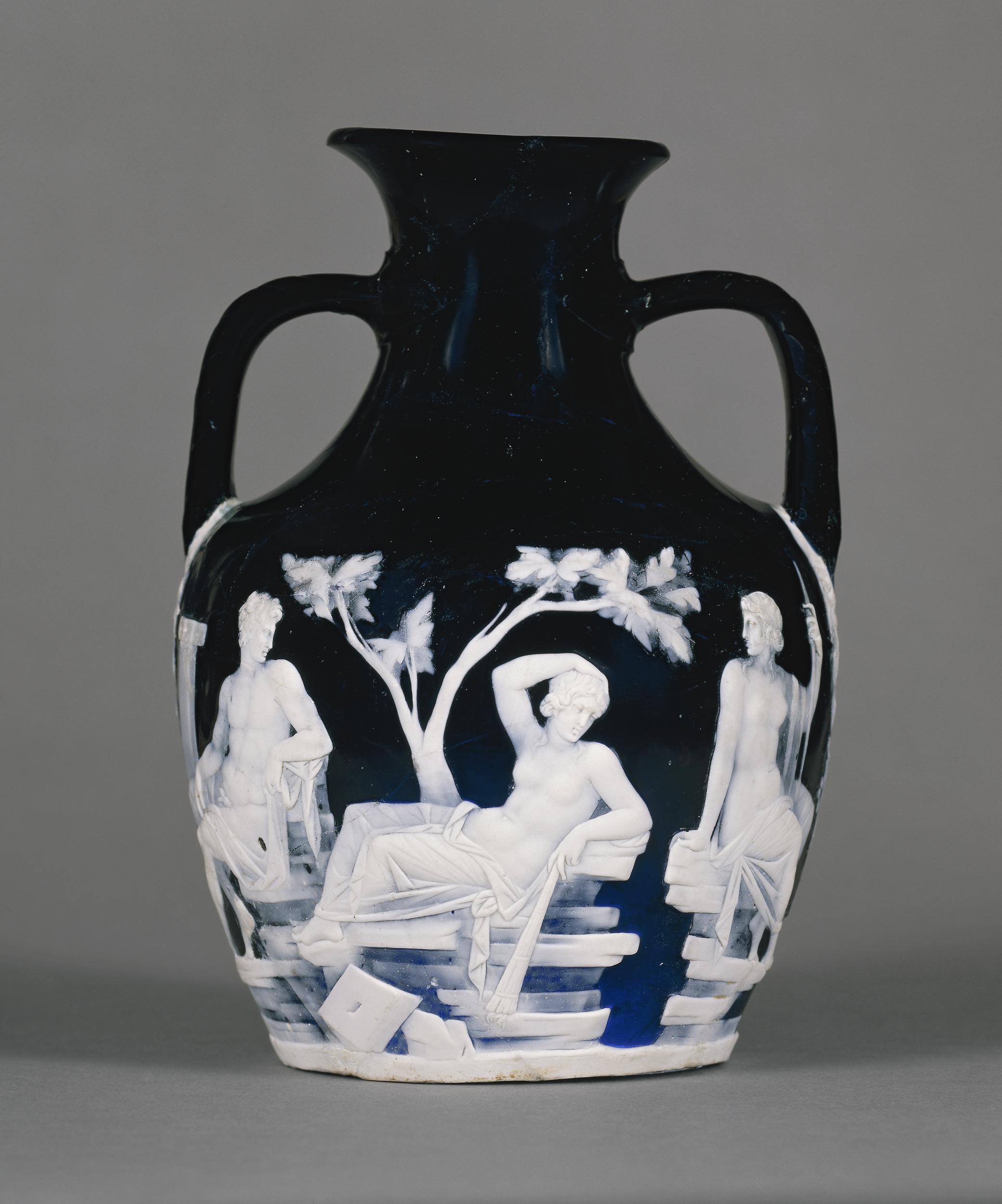
Removed from its original context, the vase entered British aristocratic collections, where it was recontextualized within new regimes of display and value. Notably, it was exhibited to the public for a fee—an early indication of the transformation of the artwork into an object of controlled visibility, economic circulation, and cultural prestige. This transition was further amplified through its reproduction by the Wedgwood manufactory, which disseminated the vase as a model of neoclassical taste. Through replication and circulation, the Portland Vase was transformed from a context-bound artifact into a universal aesthetic reference, contributing to the construction of a canon presented as timeless and transcultural. Its trajectory—from Barberini collection to British display and industrial reproduction—exemplifies how objects rooted in specific local contexts were progressively absorbed into broader systems of aesthetic value through processes of displacement, recontextualization, and appropriation (Machet 2012; Haskell and Penny 1981).
A parallel dynamic unfolded through the practice of the so-called “Grand Tour”. Undertaken primarily by Northern European elites, it established Italy—and particularly Rome, Naples, and Florence—as privileged sites for encountering antiquity and the Renaissance. The rediscovery of Pompeii and Herculaneum further intensified this process, positioning Southern Europe as a repository of material remains to be studied, admired, and incorporated into emerging European frameworks of knowledge. Within this context, Johann Joachim Winckelmann played a decisive role. His History of the Art of Antiquity (1764) codified the classical tradition—especially Greek art—as the apex of aesthetic achievement, establishing criteria that would shape neoclassical taste and the Western canon (Winckelmann [1764] 2006; Potts 1994). Significantly, Winckelmann elaborated his History in Rome, where he served as librarian to Cardinal Alessandro Albani: the interpretation was produced in the South, but addressed to—and authorized by—Northern European publics, academies, and print networks. This disjunction between the site of discourse and the site of its validation encapsulates the broader asymmetry between cultural production and epistemic authority reconstructed in this section.
This is not to suggest that the intellectual or institutional foundations of the classical tradition originated in eighteenth-century Northern Europe. On the contrary, many of the conditions that made the canon possible had already developed in the Italian peninsula. Antiquarian scholarship, humanist engagement with classical antiquity, princely collections, the first artistic academies—from Vasari’s Accademia del Disegno (1563) to the Accademia di San Luca (1593)—and early reflections on artistic historiography and cultural preservation all emerged within the Italian states. What distinguished the Northern European tradition was not the invention of these frameworks, but their abstraction from their original contexts and their reorganization into a historical narrative that presented classical antiquity as the universal origin of European civilization. What was transferred, therefore, was not only a corpus of artworks but also a set of epistemic and institutional dispositifs through which artistic value, historical continuity, and cultural authority could be stabilized and universalized.
Retracing these Italian genealogies is not intended to restore a claim of historical priority—which would merely reproduce, in reverse, the proprietary logic this article critiques—but rather to demonstrate that “origin” is itself a retrospective construction. What proved historically decisive was not where these institutions first emerged, but where the authority to interpret and universalize them came to reside.
This shift became increasingly visible through the Grand Tour. While Italy and Greece provided the material and historical basis of the classical tradition, the authority to interpret and codify that heritage became progressively concentrated within Northern European intellectual and institutional networks. The Grand Tour therefore functioned less as a reciprocal exchange than as a structure organizing the relationship between place and interpretation, between cultural production and epistemic authority.
The institutional vehicle of this displacement was, in the first instance, the academy itself—an Italian invention that migrated northward. The academic model elaborated in sixteenth-century Italy was progressively replicated across Europe: the Académie Royale de Peinture et de Sculpture in Paris (1648) explicitly drew on Roman precedents, and over the following century academies were founded in Vienna, Berlin, Madrid, Copenhagen, St. Petersburg, and London. As Nikolaus Pevsner (1940) showed in his classic account, it was through this diffusion that the pedagogy first codified in Italy—drawing from casts, copying the masters, the primacy of disegno—became the standard infrastructure of artistic training across the continent (see also Goldstein 1996). The paradox deserves emphasis: the European-wide adoption of an Italian institutional form was precisely what enabled the classical tradition to be taught—and therefore defined—at an increasing distance from the sites and contexts in which it had taken shape.
Within this expanding network, the French Academy in Rome (founded in 1666, and housed at the Villa Medici since 1803) occupied a strategic position. Conceived as the Roman outpost of the Parisian academy, it institutionalized the journey to the sources as a pedagogical device: through the Prix de Rome, selected artists were sent to study antiquity and the Renaissance masters on site, yet according to programs, criteria, and expectations defined in Paris. Rome thus functioned as a site of study and extraction, while the authority to evaluate—and to convert study into doctrine—resided elsewhere. The Academy did not simply transplant an Italian model of artistic education; it inverted its geography, turning the place of production into a place of consultation.
It was only later, between the nineteenth and early twentieth centuries—after the decline of the Grand Tour as an aristocratic practice—that this arrangement was generalized. The foundation of the German archaeological institute (1829) and of the Spanish (1873), American (1894), and British (1901) academies and schools in Rome transformed what had been an individual, itinerant mode of appropriation into a permanent, state-backed infrastructure of national scholarship, professionalizing access to antiquity in the age of scientific archaeology and national cultural politics. The succession is telling: these institutions did not accompany the Grand Tour but replaced it, converting its loosely codified economy of encounter into a stable apparatus. Far from complicating the argument, this chronology clarifies it: the displacement of interpretive authority from the sites of heritage to the institutions mediating it was not a single event but a progressive institutionalization, unfolding in successive waves.
The pedagogical practices sustained across this history—copying classical sculpture, studying Renaissance masters, engaging with archaeological remains—standardized aesthetic values grounded in harmony, proportion, and ideal form. Institutionalized through academic training, these norms became central to the consolidation of the Western canon. More fundamentally, the process entailed a form of epistemic displacement: the authority to define the meaning of classical antiquity was progressively detached from the places in which that heritage had developed and relocated to the institutions mediating its interpretation. Italian and Greek heritage, while geographically situated, was thus rearticulated as a shared European resource, available for appropriation, reinterpretation, and universalization.
The persistence of this construction is not merely historical. The 2002 Declaration on the Importance and Value of Universal Museums, signed by eighteen major Western institutions, mobilized precisely this universalist framing to argue against the restitution of contested objects, demonstrating that the universalization of the canon continues to operate as an active epistemic framework with direct implications for contemporary debates on restitution (“Declaration on the Importance and Value of Universal Museums” 2002; Sarr and Savoy 2018). In this light, the academies in Rome can be understood not merely as sites of artistic training, but as key infrastructures in the production of cultural authority. They stabilized the conditions under which certain forms could be detached from their contexts and elevated to universal models, while simultaneously obscuring their historical and territorial specificity. Yet this production of universality extended beyond collections, academies, and museums, and ultimately beyond Europe itself. It also depended on the construction of cultural imaginaries—ways of seeing, representing, and narrating difference. The same processes that universalized certain aesthetic traditions simultaneously generated internal hierarchies within Europe and provided frameworks through which cultural difference elsewhere could be classified and rendered intelligible.
The Southern “Other” Within Europe: Exoticism, Subalternity, and the Mediterranean Imaginary
The formation of the “classical canon” must be understood as inseparable from the production of imaginaries. If certain cultural forms were elevated to the status of universal reference, others were simultaneously positioned within a different temporal and epistemic framework—constructed as remnants of a glorious past, yet perceived as stagnant, decadent, or primitive in their present condition. In this sense, alterity within Europe was not only spatial, but temporal. Regions such as Southern Italy and Greece were at once idealized as the origins of Western civilization and represented as living survivals of an earlier stage of history. This ambivalent construction—at once reverential and hierarchical—allowed them to be appropriated as sources of aesthetic authority while simultaneously being framed as culturally and politically subordinate in the present. Michael Herzfeld has described a cognate condition as “crypto-colonialism”: the situation of countries—Greece foremost among them—never formally colonized, yet whose cultural forms were reshaped around external models, and whose claim to the very heritage attributed to them remained administered from elsewhere (Herzfeld 2002).
In this regard, the notion of “Occidentalism” offers a useful critical lens through which to analyze the production of stereotyped representations within the West itself. While Edward Said demonstrated how Orientalism functioned as a discourse of power embedded in colonial domination (Said 1978), subsequent scholarship, beginning with James G. Carrier, has suggested that Occidentalism designates a constellation of representations through which the “West” is imagined, constructed, and stabilized (Carrier 1995).
However, rather than limiting this concept to non-Western perspectives, it is crucial to recognize that such processes also unfold within Europe itself, through internal hierarchies and asymmetries. In this context, the construction of a European cultural identity cannot be understood as the expression of a homogeneous entity, but rather as the result of a long history of internal differentiation and asymmetrical processes of appropriation and legitimation. Roberto Dainotto has traced this logic within the history of European thought itself, showing how, from Montesquieu onward, the idea of Europe was theorized through the internal negativity of its South—an argument that anticipates, on the level of intellectual history, the visual and curatorial processes examined here (Dainotto 2007).
The formation of the classical canon and of a myth of origins rooted in Greco-Roman antiquity was closely tied to practices such as the Grand Tour, during which Northern European elites traveled to Southern Europe in search of antiquities, Renaissance masterpieces, and the perceived remnants of an “authentic” classical past. Yet this encounter was structured less as a dialogue with a contemporary culture than as a confrontation with its ruins. What was sought—and ultimately constructed—was not a living present, but a landscape of survivals: fragments of a past elevated to normative status precisely through their distance from the present.
The visual and literary culture associated with the Grand Tour played a decisive role in producing this temporally displaced image of Southern Europe. Ruins became its privileged signifier. In the paintings of Hubert Robert and the idealized landscapes of Claude Lorrain, architectural remains and classical motifs were transformed into aesthetic constructs, framing Italy as a space defined by the persistence—and aestheticization—of its own past. This poetics of ruin found a parallel in literary discourse. In The Stones of Venice (1851–1853), John Ruskin celebrated the city as both the apex of artistic achievement and a symptom of civilizational decline, turning Venice into a moral and historical allegory of rise and decay (Ruskin 1851–1853). Similarly, Goethe’s Italian Journey (1816–1817) and the writings of Byron constructed the South as a space of experiential authenticity, sensual intensity, and temporal suspension—simultaneously admired as origin and distanced as “other” (Goethe [1816–1817] 1970; Byron 2006).
Southern Italy, in particular, came to occupy a distinctly ambivalent position within this imaginary: at once the cradle of European civilization and a space perceived as excessive, backward, and morally unregulated. This ambivalence was sustained by the broader construction of a Mediterranean imaginary, developed from the eighteenth century onward through travel literature, landscape painting, and the cultural practices associated with the Grand Tour. Within this framework, the South was not encountered as a fully contemporary space, but as a repository of a mythologized past—an aesthetic and temporal elsewhere through which Europe projected both its origins and its difference.
What emerges here is a form of temporalized alterity, in which the South is not external to Europe, but positioned as its past—simultaneously foundational and obsolete. In this sense, the South within Europe can be understood as an internal “other,” produced through dynamics of domination that, while distinct from colonial expansion overseas, nonetheless operate through comparable mechanisms of representation, hierarchy, and control. Johannes Fabian’s account of the “denial of coevalness”—the discursive relegation of the observed to a time other than that of the observer—names this operation with precision: the South was not merely represented, it was de-synchronized (Fabian 1983).
This dynamic is strikingly visible in the photographic work of Wilhelm von Gloeden, whose late nineteenth-century images of young male subjects in Taormina, often staged in poses inspired by Greco-Roman statuary, exemplify the aestheticization and eroticization of the Southern body. Far from being neutral documents, these photographs construct a carefully orchestrated visual fiction in which the South is rendered as a space suspended outside modern time. By draping local models—frequently very young—in classical attributes such as laurel wreaths, amphorae, or loosely arranged fabrics evoking ancient togas, von Gloeden produces an image of an illusory continuity between antiquity and the present. Rather than revealing a living relation to the classical past, these images impose an external aesthetic framework onto local bodies, transforming them into idealized projections of a classical imaginary shaped elsewhere.

This operation is profoundly ambivalent. On the one hand, the photographs appear to celebrate the beauty of the human form through reference to classical ideals. On the other, they enact a process of objectification in which the subjects are stripped of historical and social specificity and repositioned within a regime of visual consumption. The frequent youth of the models intensifies the discomfort, introducing an ethical dimension that complicates any purely aesthetic reading of the work. In this sense, von Gloeden’s images operate at the intersection of ethnographic curiosity, aesthetic idealization, and erotic projection. The Southern body becomes a surface onto which multiple desires are inscribed: the desire for antiquity, the desire for “authenticity”, and the desire for an unmodernized “other”. As Gabriele D’Autilia has noted, this body of work can be understood as a late manifestation of the Grand Tour imaginary, in which the South is constructed not only as the repository of a lost past, but as a living embodiment of that past—simultaneously admired, consumed, and subordinated (D’Autilia 2012).
These representational frameworks were not confined to visual and literary culture. In post-Unification Italy, they became embedded within broader processes of national identity formation and were further reinforced in the late nineteenth century through positivist scientific discourse. Figures such as Cesare Lombroso in L’uomo delinquente (Lombroso 1876), and Alfredo Niceforo played a central role in translating cultural stereotypes into purportedly “objective” categories of analysis. Within this framework, Southern Italian populations were frequently described as biologically and culturally distinct from their Northern counterparts, often positioned along a continuum that blurred the boundary between Europe and North Africa. In works such as L’Italia barbara contemporanea (1898), Niceforo explicitly characterized the Italian South as a space of “barbarism” internal to the nation, attributing to its inhabitants traits associated with primitiveness, emotional excess, and social backwardness (Niceforo 1898).
These interpretations, grounded in scientific racism and social Darwinism, contributed to the construction of the South as an internal frontier—at once European and non-European. Crucially, this internal racialization was articulated through a paradoxical logic: Southern populations were depicted as closer to “other” racial types, particularly those associated with North Africa, the Middle East, and, more broadly, the Mediterranean region, yet simultaneously considered more governable because they remained within a shared Christian and national framework. The Southern subject thus emerged as a form of proximate otherness: sufficiently different to justify hierarchy and intervention, yet sufficiently similar to be incorporated into the national body.
This racialized vision of the South was progressively absorbed into post-unitarian political and institutional discourse, giving rise to what would become known as the Questione Meridionale. The South was no longer merely represented as different; it was governed as a structurally subordinate space within the unified Italian state. This dynamic was later theorized in political terms by Antonio Gramsci, whose reflections on the “Southern Question” highlighted the structural subordination of Southern Italy within both the national and broader European context. For Gramsci, the South was not simply a geographically defined region, but a politically and economically marginalized territory shaped by historical relations of domination that positioned it as an internal periphery (Gramsci [1926] 1966).
Crucially, this subordination was not only material, but also epistemic. The South was constructed as backward, irrational, and temporally out of sync with the modern nation, thereby legitimizing forms of governance and intervention that reproduced hierarchies already articulated in earlier cultural and scientific discourses. In this sense, the Southern Question can be understood as the institutionalization of a pre-existing imaginary, in which aesthetic, anthropological, and political representations converged to produce the South as an internal “other” within the unified state.
These dynamics were further explored in anthropological terms by Ernesto De Martino, whose studies of Southern Italian ritual practices revealed how marginality is not only imposed from the outside, but also experienced and negotiated within internal cultural frameworks. In works such as Il mondo magico (1948), Sud e magia (1959), and La terra del rimorso (1961), De Martino analyzed phenomena such as magic, mourning rituals, and tarantism—a culturally mediated form of distress traditionally associated with the bite of the tarantula—as expressions of what he defined as a “crisis of presence,” challenging the hierarchical distinction between rational and irrational forms of knowledge. Rather than treating such practices as folkloric residues, he interpreted them as historically situated responses to existential and material precariousness (De Martino 1948; 1959; 1961).
This line of inquiry can be further situated within the broader framework of Italian demo-ethno-anthropological studies, particularly in the work of Alberto Mario Cirese Cultura egemonica e culture subalterne (1973), who, building on Gramsci’s reflections, theorized the notion of “subaltern cultures” as structurally positioned within relations of domination. From this perspective, local cultural expressions are not simply marginal or residual, but are produced within asymmetrical power relations that determine their visibility, legitimacy, and transmission (Cirese 1973).
These reflections resonate with later postcolonial theory, particularly in the work of Gayatri Chakravorty Spivak, whose notion of the subaltern extends the analysis of marginalization to broader global contexts. From this perspective, the European South can be understood not only as an object of representation, but as a site in which dynamics of subalternity are already at work within Europe itself (Spivak 1988).
This is precisely what makes the European South central to a decolonial analysis, particularly within the field of art and curatorial practice. The exoticization of the Mediterranean and the construction of a “classical” heritage reveal that Western cultural identity did not emerge as a unified entity, but as the outcome of asymmetrical processes of appropriation, projection, and epistemic consolidation. The formation of the classical canon, often presented as the universal foundation of Western art and aesthetics, must therefore be understood within this framework. More importantly, these processes can be seen as anticipating the epistemic logic later extended to extra-European contexts. The mechanisms through which the European South was integrated—through aestheticization, temporal distancing, cultural appropriation, and the minimization of difference—prefigure the universalizing ambitions of modernity, within which the colonial “other” was often constructed as occupying an earlier stage of human development, and thus as potentially assimilable within a universal historical trajectory, where cultural difference was subsumed into homogenizing frameworks compatible with dominant regimes of value. The European South thus emerges as a laboratory of coloniality, a site in which the epistemic, aesthetic, and representational mechanisms that would structure colonial relations were already elaborated within Europe itself. While the classical canon had structured the assimilation of the European South, the modernist canon incorporated extra-European practices into a global narrative of artistic development, while often reformulating difference in ways that rendered it compatible with dominant frameworks.
The tensions generated by this dynamic would become increasingly visible in the late twentieth century, as postmodern and postcolonial critiques exposed the limits of these universalizing claims. The persistence of these structures helps to explain how the classical canon—and later the modernist canon—could continue to operate as universalizing frameworks despite their internal contestations.
Contextual Curating as a Decolonial Research Method
The genealogy reconstructed in the preceding sections clarifies why a decolonial curatorial method must be, specifically, a contextual one. What the formation of the classical canon and the construction of the Southern “other” reveal is that epistemic hierarchies were historically produced through operations of de-contextualization: artworks were detached from the sites, relations, and histories of their production; interpretive authority was relocated to institutions situated elsewhere; and difference was rendered legible only through frameworks external to the contexts that had produced it. If coloniality operated by abstracting forms from their contexts in order to universalize them, a decolonial method must operate in reverse: by restoring the constitutive relation between artworks, contexts, and interpretation, and by relocating epistemic authority within the situations in which meaning is produced. It is precisely this counter-operation that contextual curating names.
Recognizing this genealogy is essential when approaching the global scale at which these processes were historically deployed during the colonial period and later theorized within postcolonial and decolonial studies. It is within this framework that what may be described as a “contextual turn” in contemporary artistic and curatorial practices becomes particularly significant. Emerging in parallel with—and partly in response to—the development of post-modernism and subsequently postcolonial studies, this shift calls for a re-situation of epistemologies, aesthetic canons, and interpretive frameworks. Rather than assuming the universality of inherited models, it foregrounds their historical contingency and demands that they be re-articulated in relation to specific contexts, conditions, and positionalities.
Within this genealogy, contextual curating operates as a decolonial research method grounded in the broader contextual turn described above. Emerging in opposition to the neutrality of the “white cube,” contextual practices do not treat the artwork as an autonomous object, but as something intrinsically embedded within the conditions of its production, reception and circulation—conditions that are at once spatial, historical, social, cultural, and political.
An early and particularly significant example of such practices can be found in the Bienal de La Habana, established in 1984, which offered a structurally distinct curatorial model. Conceived as a platform dedicated to artistic production in what was then framed as the “Third World,” the Biennial sought to operate outside the dominant circuits of Western validation, foregrounding practices rooted in Latin America, Africa, Asia, and the Middle East. Rather than extending an established aesthetic and evaluative framework, it created conditions for the articulation of cultural and artistic agency from within historically marginalized contexts. Although the Biennial did not formulate contextual curating as an explicit theoretical category, its emphasis on situated production, South–South exchange, and the decentering of Western institutional authority prefigured several of the methodological principles developed here under that term. In this sense, it can be understood as anticipating contextual curating as a mode of practice grounded in situated knowledge, relational exchange, and the reconfiguration of the conditions under which artistic value is produced and recognized (Mosquera 1994; Weiss 2011).
Central to this vision was the curatorial approach articulated by Gerardo Mosquera, who emphasized the need to rethink the geography of contemporary art by shifting attention away from established centers toward more plural and context-specific forms of production. The Havana Biennial did not simply seek to include artists within a pre-existing framework, but to question the structures through which artistic value and legitimacy were defined, proposing instead a model grounded in horizontal exchange, cultural specificity, and critical dialogue across different contexts. As Mosquera has observed, the lack of dedicated contemporary art institutions led the Biennial to unfold across the urban fabric of Havana, occupying multiple sites throughout the city. Rather than constituting a limitation, this condition enabled a form of curatorial practice in which the exhibition became inseparable from its social, spatial, and cultural environment. In this sense, the Havana Biennial can be understood as an early instance of contextual curating, where meaning emerges through the interaction between artistic practice, site, and lived environment (Mosquera 2010).
While often associated with site-specific art, the notion of “context” operates on a broader level. As theorized by Miwon Kwon in One Place After Another (2002), the concept of site has expanded from a physical location to encompass discursive, social, and institutional dimensions. Yet the notion of context allows for a more complex understanding, referring not merely to location but to a constellation of interrelated factors—linguistic, cultural, historical, political, and symbolic (Kwon 2002).
This distinction is crucial. Whereas site-specific practices engage with spatial characteristics, contextual approaches foreground the conditions that structure a place—its histories, conflicts, and forms of knowledge. As noted by Joanna Warsza (2023), the shift from “site-specific” to “context-specific” marks a move from spatial determination to socio-political and historical embeddedness. Importantly, contextual practices do not emerge within Western art discourse, but are deeply connected to practices operating at its margins. As articulated by Polish artist Jan Świdziński, in the 1970s, in his manifesto of “contextual art” this approach sought to resist both the universalizing tendencies of Western modernism and the ideological constraints of socialist realism, emphasizing process, situated engagement, and the integration of art within lived realities (Świdziński 1976). Świdziński’s formulation, moreover, was not an isolated episode. Peter Weibel developed a parallel reflection on the contextual determination of art, which he resumed in the 1990s with the exhibition and volume Kontext Kunst (Weibel 1994), while Paul Ardenne later theorized an art contextuel (Ardenne 2002) encompassing practices of urban intervention, situation, and participation; resonances of this concern can equally be traced in the social history of art. It is this plural genealogy—developed at the margins of dominant paradigms and across distinct critical traditions—that the author’s monograph designates as a “contextual paradigm.”
In this sense, contextual curating inherits a genealogy that is already de-centered. It does not arise from the consolidation of dominant paradigms, but from practices that challenge their claims to universality. For this reason, it offers a particularly fertile ground for articulating decolonial methodologies. Transposed into curatorial practice, this approach entails a shift from curating as display toward curating as inquiry. It foregrounds processes of co-creation, in which artists, curators, and communities participate in the production of situated knowledge. Meaning is not pre-defined, but emerges through relational and processual encounters. This also implies a redistribution of epistemic authority. The curator is no longer positioned as a central figure who interprets and legitimizes, but as a situated agent operating within a network of relations, where authority becomes negotiated, shared, and contingent.
As a decolonial method, contextual curating thus shifts the focus from representation to the conditions of knowledge production itself. It does not simply seek to include marginalized perspectives, but to transform the structures through which meaning, value, and legitimacy are constructed. It is precisely from this methodological repositioning that the possibility of moving beyond colonial frames begins to take shape.
If the Havana Biennial marked a decisive departure from dominant exhibitionary models, paving the way for the dissemination of a contextual curatorial approach, it also contributed to the emergence of a series of similar initiatives across the Global South. Significant examples include the Biennial of African Contemporary Art in Dakar (Dak’Art), established in 1992, and, more recently, the Kochi-Muziris Biennale, established in 2012. While emerging in distinct geopolitical contexts, both initiatives share a curatorial approach grounded in the articulation of local perspectives and the centrality of context in the production of meaning.
In Dakar, this has often taken the form of a strong emphasis on African artistic production and curatorial agency rooted in the continent itself. What qualifies Dak’Art as an instance of contextual curating as method, however, is not its geographic location but the way its structure redistributes the conditions of artistic legitimacy. Conceived as a pan-African platform, the Biennial established selection and validation procedures anchored in the continent rather than in Western institutional circuits, constituting an infrastructure through which African artists could enter international circulation without passing through external validation. Its progressive expansion into the urban fabric of Dakar through the “OFF” program—hundreds of exhibitions and interventions hosted in houses, courtyards, schools, and workshops across the city—further embeds the exhibition within the social and spatial environment that sustains it, making the local public a constitutive component of the exhibition rather than a secondary addressee. Significantly, the 2016 and 2018 editions, both directed by Simon Njami—Réenchantements: The City in the Blue Daylight, whose title was drawn from a poem by Léopold Sédar Senghor, and L’Heure Rouge, inspired by Aimé Césaire—rearticulated the curatorial strategies discussed earlier within an institution historically and geographically rooted in Dakar. In both editions, invited curators from different cultural and geographical contexts contributed to the exhibition within a shared curatorial framework whose conceptual direction, spatial articulation, and institutional grounding remained anchored in Dakar. This offered direct insight into how the Biennial negotiates transnational circulation without ceding its local anchorage.
In Kochi, by contrast, although curatorial leadership has generally been entrusted to Indian artists with a deep understanding of the local cultural landscape, the exhibition maintains an explicitly international scope, inviting artists from across the globe to engage with and respond to the specific historical, social, and spatial conditions of the Indian context. Here, too, it is the method rather than the location that matters. Founded by the artists Bose Krishnamachari and Riyas Komu, and generally curated by an artist rather than a professional curator, the Biennale takes its name from Muziris, the ancient port whose trade routes connected the Malabar coast to the Mediterranean, the Arabian Peninsula, and China. The reference is not ornamental: by anchoring the exhibition in a precolonial history of exchange, the Biennale frames Kochi not as a periphery of the global art system but as a site with its own long genealogy of cosmopolitanism, displacing the assumption that internationalism radiates outward from Western centers. Installed in colonial-era warehouses and spice godowns rather than in purpose-built galleries, the exhibition asks invited artists to work in relation to the material and historical stratifications of the site, so that context operates as a generative framework for the production of new work rather than as a backdrop for its display.
Beyond large-scale biennials, contextual curating has also emerged through a range of exhibitionary and para-exhibitionary practices that foreground the situated production of knowledge. A particularly significant example of contextual curating within the European environment is the MAAM Museo dell’Altro e dell’Altrove, conceived and developed by Giorgio De Finis. Established in 2012, in Rome, within a former factory occupied by a community of migrants and precarious residents, the project was initially conceived as a strategy to prevent the eviction of its inhabitants. In this context, curatorial practice did not operate as an external cultural intervention, but as a means of producing visibility and legitimacy for a community at risk of displacement. By transforming the occupied space into a ‘museum’ through site-specific works and initiatives, the project mobilized the symbolic and institutional value of art as a form of protection, reconfiguring the relationship between cultural production and social reality, embedding artistic practice directly within a lived environment. The museum was not imposed upon the space, but emerged from it, transforming curating into a form of situated engagement that actively intervenes in processes of urban and social exclusion.
The methodological implications deserve emphasis. At the MAAM the artworks, now numbering in the hundreds, are produced in dialogue with the inhabitants and are physically inseparable from the spaces of daily life: they cover the walls of corridors, common areas, and dwellings, constituting what De Finis has described as a barricade of art protecting the community against eviction. Curatorial authority is here radically redistributed: what enters the museum is negotiated with the inhabitants, exhibition value and use value coincide in the same spaces, and the “collection” cannot be displaced without dismantling the life of the community that inhabits it. Each of the operations that this article associates with contextual curating—situated embedding, co-creation, the redistribution of epistemic authority, and the production of legitimacy from within—is here observable in its most literal form.
The case of the MAAM suggests that a decolonial curatorial method may also illuminate situations not reducible to a direct colonial genealogy, provided that the specific histories and structures of power shaping those contexts are not collapsed into an undifferentiated model of marginalization.
In such cases, the relevance of decoloniality lies not in its strict historical reference to colonialism, but in its capacity to interrogate and transform the conditions under which visibility, legitimacy, and cultural value are produced. By engaging with contexts characterized by structural inequality, contextual curating operates as a form of situated intervention, capable of addressing asymmetries that persist beyond the colonial framework itself.
From this perspective, decoloniality can emerge not as a fixed category tied to specific geographies, but as a methodological approach that enables the reconfiguration of curatorial practice across diverse contexts, wherever relations of power, exclusion, and epistemic marginalization are at stake.
Conclusion
This article has argued that decoloniality, when approached through curatorial practice, cannot be reduced to a thematic engagement with colonial histories, nor to the inclusion of previously marginalized subjects within existing exhibitionary frameworks. Rather, it requires a shift from representation to the epistemic conditions through which visibility, meaning, and artistic value are produced. From this perspective, exhibitions are not neutral containers of cultural difference, but sites in which authority, legitimacy, and interpretation are actively constructed and contested.
By revisiting key exhibitions from Les Magiciens de la Terre and The Other Story to the practices of Okwui Enwezor, Simon Njami, Awam Amkpa, Bonaventure Soh Bejeng Ndikung, and Azu Nwagbogu, the paper has shown that the decolonial force of curatorial practice lies in its capacity to unsettle the frameworks through which art becomes legible. What is at stake is not simply the expansion of visibility, but the reconfiguration of the conditions under which subjects, works, and histories are made visible in the first place.
At the same time, the article has extended this inquiry beyond the conventional colonial divide by tracing the intra-European genealogies of canon formation and the production of Southern European alterity. The classical canon emerges here not as a neutral inheritance, but as the outcome of historically situated processes of appropriation, circulation, and legitimation. Likewise, European identity appears not as a homogeneous formation, but as one constituted through internal hierarchies and the production of proximate others.
Within this framework, contextual curating has been proposed not as a universal model, but as a situated method that emerges from practices embedded in specific social, historical, and territorial conditions. From the Havana Biennial to the Kochi-Muziris Biennale and the MAAM in Rome, such practices demonstrate that curating can function as a form of inquiry, co-creation, and epistemic redistribution. In this sense, practicing decoloniality means not simply denouncing colonial legacies, but transforming the structures through which knowledge, value, and legitimacy are produced, mediated, and made operative across diverse contexts by means of a context-oriented curatorial approach.
Two lines of inquiry remain open. The first concerns the further development of the intra-European framework outlined here: the notion of the European South as a laboratory of coloniality invites a more sustained investigation of internal asymmetries—across the Mediterranean and Europe’s other internal peripheries—which this article could only begin to trace. The second concerns the epistemological dimension of restitution: if, as argued here, the canon was constituted through operations of de-contextualization, then restitution cannot be understood solely as the return of objects, but must extend to the restoration of the contexts of interpretation within which those objects were produced and made meaningful—a question that contextual curating, as a method, is particularly equipped to address.
References
Amkpa, Awam. 2015–2018. ReSignifications. Curatorial project: exhibition materials and curatorial texts.
Araeen, Rasheed, ed. 1989. The Other Story: Afro-Asian Artists in Post-War Britain. London: Hayward Gallery.
Ardenne, Paul. 2002. Un art contextuel: création artistique en milieu urbain, en situation, d’intervention, de participation. Paris: Flammarion.
Bennett, Tony. 1995. The Birth of the Museum: History, Theory, Politics. London: Routledge.
Bismarck, Beatrice von. 2022. The Curatorial Condition. Berlin: Sternberg Press.
Byron, George Gordon. 2006. Selected Writings. London: Penguin.
Carrier, James G., ed. 1995. Occidentalism: Images of the West. Oxford: Clarendon Press.
Chakrabarty, Dipesh. 2000. Provincializing Europe: Postcolonial Thought and Historical Difference. Princeton: Princeton University Press.
Chérel, Emmanuelle. 2016. “La Triennale de Paris, Intense Proximité: l’amorce d’une mutation?” In L’histoire n’est pas donnée, edited by Emmanuelle Chérel and Fabienne Dumont, 49–62. Rennes: Presses Universitaires de Rennes.
Cicero. 2020. Prima della Sicilia. Verrine 2,1 (De praetura urbana), 1–102. Edited by Tommaso Ricchieri. Pisa: Edizioni ETS.
Cirese, Alberto Mario. 1973. Cultura egemonica e culture subalterne. Palermo: Palumbo.
Dainotto, Roberto M. 2007. Europe (in Theory). Durham: Duke University Press.
D’Autilia, Gabriele. 2012. La storia nella fotografia. Milan: Bruno Mondadori.
“Declaration on the Importance and Value of Universal Museums.” (2002) 2004. ICOM News 57 (1): 4.
De Martino, Ernesto. 1948. Il mondo magico. Turin: Einaudi.
De Martino, Ernesto. 1959. Sud e magia. Milan: Feltrinelli.
De Martino, Ernesto. 1961. La terra del rimorso. Milan: Il Saggiatore.
Enwezor, Okwui, ed. 2002. Documenta 11_Platforms. Ostfildern-Ruit: Hatje Cantz.
Enwezor, Okwui. 2008. “The Postcolonial Constellation.” In Antinomies of Art and Culture: Modernity, Postmodernity, Contemporaneity, edited by Terry Smith, Okwui Enwezor, and Nancy Condee, 207–234. Durham: Duke University Press.
Fabian, Johannes. 1983. Time and the Other: How Anthropology Makes Its Object. New York: Columbia University Press.
Gioia Levy, Valentina. 2025. La curatelle contextuelle : Art contextuel et pratiques curatoriales à l’ère de la Multipolarité. PhD diss., Université Paris 1 Panthéon-Sorbonne.
Gioia Levy, Valentina. 2026. Le Paradigme Contextuel. Paris : L’Harmattan.
Goethe, Johann Wolfgang von. (1816–1817) 1970. Italian Journey. Translated by W. H. Auden and Elizabeth Mayer. London: Penguin.
Goldstein, Carl. 1996. Teaching Art: Academies and Schools from Vasari to Albers. Cambridge: Cambridge University Press.
Gramsci, Antonio. (1926) 1966. “Alcuni temi della quistione meridionale.” In La questione meridionale, edited by Franco De Felice and Valentino Parlato. Rome: Editori Riuniti.
Haskell, Francis. 2000. The Ephemeral Museum: Old Master Paintings and the Rise of the Art Exhibition. New Haven: Yale University Press.
Haskell, Francis, and Nicholas Penny. 1981. Taste and the Antique: The Lure of Classical Sculpture 1500–1900. New Haven: Yale University Press.
Herzfeld, Michael. 2002. “The Absent Presence: Discourses of Crypto-Colonialism.” South Atlantic Quarterly 101 (4): 899–926.
Horden, Peregrine, and Nicholas Purcell. 2000. The Corrupting Sea: A Study of Mediterranean History. Oxford: Blackwell.
Kwon, Miwon. 2002. One Place after Another: Site-Specific Art and Locational Identity. Cambridge, MA: MIT Press.
Lafuente, Pablo. 2013. “Introduction: From the Outside In – ‘Magiciens de la Terre’ and Two Histories of Exhibitions.” In Making Art Global (Part 2): “Magiciens de la Terre” 1989, edited by Lucy Steeds, 8–22. London: Afterall Books.
Lombroso, Cesare. 1876. L’uomo delinquente. Turin: Bocca.
Machet, Laurence. 2012. “The Portland Vase and the Wedgwood Copies: The Story of a Scientific and Aesthetic Challenge.” Miranda 7.
Marchand, Suzanne L. 1996. Down from Olympus: Archaeology and Philhellenism in Germany, 1750–1970. Princeton: Princeton University Press.
Martinon, Jean-Paul, ed. 2013. The Curatorial: A Philosophy of Curating. London: Bloomsbury Academic.
Mercer, Kobena. 1994. Welcome to the Jungle: New Positions in Black Cultural Studies. London: Routledge.
Mignolo, Walter D. 2011. The Darker Side of Western Modernity: Global Futures, Decolonial Options. Durham: Duke University Press.
Morselli, Raffaella. 2002. Collezioni e quadrerie nella Mantova dei Gonzaga. Milan: Silvana Editoriale.
Mosquera, Gerardo. 1992. “Beyond the Fantastic: Contemporary Art Criticism from Latin America.” Third Text, no. 19.
Mosquera, Gerardo. 1994. “Some Problems in Transcultural Curating.” In Global Visions: Towards a New Internationalism in the Visual Arts, edited by Jean Fisher, 133–139. London: Kala Press in association with the Institute of International Visual Arts.
Mosquera, Gerardo. 2010. “The Havana Biennial: A Concrete Utopia.” In The Biennial Reader, edited by Elena Filipovic, Marieke van Hal, and Solveig Øvstebø, 198–207. Bergen / Ostfildern-Ruit: Bergen Kunsthall / Hatje Cantz.
Ndikung, Bonaventure Soh Bejeng. 2023. Pidginization as Curatorial Method: Messing with Languages and Praxes of Curating. London: Sternberg Press.
Niceforo, Alfredo. 1898. L’Italia barbara contemporanea. Milan: Treves.
O’Neill, Paul. 2012. The Culture of Curating and the Curating of Culture(s). Cambridge, MA: MIT Press.
Pevsner, Nikolaus. 1940. Academies of Art, Past and Present. Cambridge: Cambridge University Press.
Pomian, Krzysztof. 1987. Collectionneurs, amateurs et curieux: Paris, Venise, XVIe–XVIIIe siècle. Paris: Gallimard.
Potts, Alex. 1994. Flesh and the Ideal: Winckelmann and the Origins of Art History. New Haven: Yale University Press.
Rogoff, Irit. 2013. “The Expanded Field.” In The Curatorial: A Philosophy of Curating, edited by Jean-Paul Martinon, 41–48. London: Bloomsbury Academic.
Ruskin, John. 1851–1853. The Stones of Venice. London: Smith, Elder & Co.
Said, Edward W. 1978. Orientalism. New York: Pantheon Books.
Sarr, Felwine, and Bénédicte Savoy. 2018. The Restitution of African Cultural Heritage: Toward a New Relational Ethics. Paris: Ministère de la Culture.
Savoy, Bénédicte. 2003. Patrimoine annexé: les biens culturels saisis par la France en Allemagne autour de 1800. Paris: Éditions de la Maison des sciences de l’homme.
Settis, Salvatore. 2004. Futuro del “classico”. Turin: Einaudi.
Spivak, Gayatri Chakravorty. 1988. “Can the Subaltern Speak?” In Marxism and the Interpretation of Culture, edited by Cary Nelson and Lawrence Grossberg. Urbana: University of Illinois Press.
Świdziński, Jan. 1976. Art as Contextual Art. Lund: Galerie S:t Petri.
Weibel, Peter, ed. 1994. Kontext Kunst: Kunst der 90er Jahre. Cologne: DuMont.
Weiss, Rachel. 2011. To and from Utopia in the New Cuban Art. Minneapolis: University of Minnesota Press.
Wemega-Kwawu, Rikki. 2012. “The Politics of Exclusion.” SMBA Project, Stedelijk Museum Bureau Amsterdam.
Winckelmann, Johann Joachim. (1764) 2006. History of the Art of Antiquity. Translated by Harry Francis Mallgrave. Los Angeles: Getty Research Institute.