Introduction
Traditionally, immigrant integration has been measured through “objective” economic and demographic factors (Ballarino, 2018). More recently, scholars of migration have applied subjective experiences as indicators of integration (Paparusso, 2019; Shen & Kogan, 2020). Subjective indicators offer insight into immigrants’ experiences “centred on personal judgments and criteria, not on criteria deemed important by others” (Paparusso, 2019, p. 493). In this Icelandic study, we analyse immigrants’ perceptions of the quality of life and satisfaction with services in their municipality of residence, as well as their trust in institutions in the receiving society. We are particularly interested in how immigrants’ language skills (self-reported proficiency in English and Icelandic, and frequency of Icelandic use) relate to perceived community quality of life and institutional trust, in comparison with other demographic, economic, and social factors. While self-reported language proficiency provides an estimate of immigrants’ language skills, self-reported language use has been shown to be a valuable measure of immigrants’ communicative competence and confidence in their linguistic abilities (Leonardi, 2020).
The first subjective indicator in focus in this study is community quality of life, understood as overall satisfaction with life in one’s municipality of residence, as well as satisfaction with employment opportunities, access to language courses, cultural activities, sports and recreational activities, religious services, and health services. The second subjective indicator we investigate is immigrants’ trust in public and political institutions (Police, Parliament, Labour Unions, the Directorate of Labour, Schools, and the Health Care system).
We ask: What demographic and social factors are associated with community quality and life, and institutional trust? What is the role of immigrants’ language skills and language use in perceived community quality of life and trust in institutions?
The relationship between acculturation and immigrants’ trust in institutions is complex. The phenomenon described as the “integration paradox” indicates that more structurally acculturated migrants are more critical of the receiving society (Schaeffer & Kas, 2023; Verkuyten, 2016). Therefore, the third question addressed in this article is: Is there evidence of the ‘integration paradox’ in Iceland?
Our study advances the literature on immigrants’ experiences in receiving communities in three ways:
Firstly, we investigate how immigrants’ linguistic profile relates to their perceived community quality of life and trust in institutions, an issue that previous studies have been unable to explore beyond speculations. Secondly, we explore whether immigrants’ proficiency in and use of the language of the receiving society are a deciding factor in their perceived quality of life and trust in public institutions. Thirdly, in addition to the official and majority language of the receiving society, we consider the role of the lingua franca English. In countries where English is widely spoken, English facilitates interactions with municipal services and political and public institutions, potentially shaping immigrants’ experiences with these institutions and their trust in them.
Iceland presents a unique context for studying immigrant integration for a variety of reasons: There has been a considerable increase in immigration to Iceland in recent years (OECD, 2024), the Icelandic language is held in high regard in the country (Hoffmann & Holm, 2025), and Iceland is considered a high-trust society (Vilhelmsdóttir & Kristinsson, 2018) with a high quality of life (Sataøen, 2021).
We discuss the literature on immigrants’ perception of community quality of life and trust in institutions in the receiving society and provide an overview of recent developments in Iceland and the government’s immigration policies. Then, we provide details on our survey data and methods and present the results of two binomial regression analyses. We discuss our results in the context of the international literature and the developments in Iceland and reflect on the implications of our findings for policymakers.
Trust and community quality of life in the Icelandic context
Factors such as Iceland’s rapid economic recovery after the 2008 economic crisis, the low unemployment rate, and a stable welfare state (Rúnarsdóttir & Vilhjálmsson, 2015) have led to steady increases in immigration to Iceland in recent years. In 2000, immigrants comprised 3% of Iceland’s population, while in 2025 this number had grown to 17.4% according to Statistics Iceland’s definition of an immigrant as a person born abroad whose parents and grandparents were born abroad (Statistics Iceland, 2025). Most immigrants in Iceland are from Poland (33% of the total immigrant population), followed by Lithuania (7%), Romania (5%), Latvia (4%), and Ukraine (3.5%) (Government of Iceland, Ministry of Social Affairs and Labour, 2023, p. 13).
Iceland is considered a high-trust society, and its inhabitants overall express high levels of life satisfaction (Berggren & Bjørnskov, 2020; Vilhelmsdóttir & Kristinsson, 2018). However, a 2018 study by Vilhelmsdóttir and Kristinsson found that trust in public institutions remains high in Iceland but has not recovered from the 2008 economic crisis (Vilhelmsdóttir & Kristinsson, 2018). Immigration has gained increasing attention from policymakers in Iceland. Although the country’s migration policy had not been updated since its publication in 2007, new policy documents addressing migration issues have been released in consecutive years (Government of Iceland, 2023; 2024). Prior studies on immigrants in Iceland show that they tend to occupy more precarious positions than native-born populations across areas such as employment, housing, inclusion, and well-being (Ragnarsdóttir et al., 2024).
One of the most persistent challenges in immigration issues in Iceland is the segregated labour market: Immigrants are often employed in lower‑status jobs and labour segments where native workers are less present, and many immigrants are overqualified for their current profession (OECD, 2024). Immigrants in Iceland face challenges participating in the Icelandic-speaking community (Skaptadóttir & Innes, 2017) and accessing resources and opportunities to learn and practice Icelandic (Hoffmann et al., 2021). Even though provision of Icelandic as a second language courses is expanding considerably in recent years, one example is the opportunity to study Icelandic as a language online at the University, ideologies of purism and authenticity prevail and are, for example, expressed in a low tolerance towards non-standard versions of the language (Hoffmann & Holm, 2022).
Literature review: Community quality of life, institutional trust, and their relation to immigrants’ linguistic profiles
Subjective factors of integration, such as community quality of life and trust in institutions, provide insights into integration beyond economic and demographic measures and have the potential to provide a rich understanding of immigrants’ experiences and interactions in receiving communities (Amit & Bar-Lev, 2015; Arcand et al., 2020).
Language and immigrants’ perception of community quality of life
Measurements of perceived community quality of life often include factors such as “housing, education, government, healthcare, employment, religion, public safety, retailing, transportation, and leisure” (Sirgy & Young, 2008, p. 81). Immigrants tend to report lower perceived community quality of life than long-term residents.
Social capital has been shown to be positively related to immigrants’ perceived quality of life. Putnam (2000) distinguishes between bonding and bridging social capital, with bonding capital meaning positive ties to people who are like yourself and bridging social capital as positive ties to people who are unlike yourself (Putnam, 2000). A third type of social capital is linking social capital, which can be defined as “trust towards authority and formal institutions” (Chu et al., 2018, p. 474). For example, in Iceland, a study comparing the psychological well-being of Polish and Asian immigrants with their native peers found that non-natives reported lower life satisfaction and greater distress, because immigrants experienced more challenging socioeconomic conditions and limited access to social support (Rúnarsdóttir & Vilhjálmsson, 2015, p. 580).
An internet field experiment comparing the experiences of Polish and Icelandic people on the housing market found that “Polish men in fact face a more difficult situation on the rental housing market than others”, hindering immigrants’ mobility (Björnsson et al., 2018).
Factors that have been associated with higher satisfaction with immigrants’ life satisfaction among immigrants are social embeddedness in the receiving society, safety and security, economic factors, demographic factors, and acculturation, which is often measured via language skills (Amit & Bar-Lev, 2015; Angelini et al., 2015; Barillé, 2024; Choi et al., 2019; Lindner et al., 2020). Studies found a strong association between language skills in the receiving country’s language and satisfaction with life in one’s place of residence, which has been explained by the fact that language skills facilitate labour market integration and support social embeddedness in communities (Pletneva, 2019). Prior studies indicate that employment opportunities are crucial for immigrants’ perceived quality of life (Paparusso, 2019; Shen & Kogan, 2020).
Drawing on the research presented above, we propose that skills in the receiving country’s language might be positively associated with a perceived high quality of life in one’s place of residence. We hypothesize that stronger proficiency in the official language of the receiving country (Icelandic) is associated with a higher perceived quality of life in the community (H1) (Angelini et al., 2015; Choi et al., 2019). We also propose the following secondary hypotheses: Immigrants’ economic position is positively associated with higher perceived community quality of life (H1.1; Amit, 2009; Paparusso, 2019; Shen & Kogan, 2020), and more frequent social contact with long-term residents of the receiving society is associated with higher perceived community quality of life (H1.2; Arpino & de Valk, 2017; Wilkes & Wu, 2019).
Given the opportunities afforded by the lingua franca English in places where it is widely spoken, access to the labour market and educational and work opportunities (Henry, 2016), we further hypothesize that better English skills are associated with perceived higher quality of life in immigrants’ community of residence (H2).
Educational level had both positive and negative effects in prior studies: education increases immigrants’ employment opportunities, enhancing life satisfaction (Paparusso, 2019), but a higher educational level also carries a higher risk of underemployment, which can lead to a lower perceived quality of life in the community.
The integration paradox: Are more integrated immigrants less trustful in institutions?
Trust in institutions means that “citizens assess public institutions as promise-keeping, accountable, efficient, competent, caring, predictable, open, transparent, fair and honest” (Kaasa & Andriani, 2022, p. 46). Trust in institutions has been understood through two main approaches: the institutional performance approach, which sees trust as a function of how well institutions perform, and the social trust approach, which views institutional trust as an extension of the trust individuals place in others (Kaasa & Andriani, 2022). Immigrants’ trust in institutions is thus shaped by both the quality of services provided by institutions and immigrants’ cultural background.
Many studies find that acculturation is associated with lower trust in institutions: Migrants’ initial confidence in receiving country institutions decreases “the more acculturated immigrants are to mainstream society, whether this is measured with longer residence in the host country, generational status […], or language and citizenship” (Röder & Mühlau, 2012, p. 789). While language thus provides access to institutions and favours interactions with society, it has a limited negative effect on trust in institutions (Arcand et al., 2020; Michelson, 2003; Röder & Mühlau, 2012).
The phenomenon of more acculturated migrants turning away from the receiving society rather than becoming more oriented towards it is called the ‘integration paradox’ (Schaeffer & Kas, 2023; Verkuyten, 2016). The integration paradox has been explained by increased exposure and comparison to majority-group members, increased awareness of exclusionary discourses and practices, and heightened sensitivity to discrimination due to higher education, and feelings of frustration due to relative deprivation (e.g., the feeling to be disadvantaged in comparison to other groups (Schaeffer & Kas, 2023; Verkuyten, 2016). In Iceland, a study among Polish immigrants found that those with better Icelandic skills perceived more discrimination in the media and felt treated worse (Ólafs & Zielińska, 2010, p. 83), suggesting that advanced language skills can be associated with greater awareness of exclusionary discourses.
Our review of the literature on immigrants’ trust in institutions and the concept of the integration paradox shows that immigrants’ trust in institutions tends to decrease over time of residence and with higher proficiency in the language of the receiving society (Michelson, 2003; Röder & Mühlau, 2012). We, therefore, hypothesize that immigrants’ proficiency in Icelandic is associated with lower reported trust in public and political institutions in Iceland (H3).
Hypotheses
To summarize: Based on the literature reviews and the discussion of the case of Iceland, we derive the following hypotheses:
H1: Immigrants’ self-reported proficiency level in Icelandic and frequency of using Icelandic are related to higher perceived community quality of life.
H1.1 Immigrants’ economic position is positively associated with higher perceived community quality of life.
H1.2 More social contact with natives of the receiving society is associated with higher perceived community quality of life.
H2: Self-reported proficiency level in the lingua franca English is associated with more satisfaction with the community quality of life.
H3: Higher self-reported proficiency level in the language and more frequent use of the language of the receiving society are related to less trust in institutions of the receiving society, because studies show that more acculturated immigrants report lower levels of trust in institutions (“integration paradox”).
Data, variables, and methods
Data collection
This research draws on data derived from an online survey conducted amongst immigrant participants in Iceland (N=2,139) in 2018, using both convenience and snowball sampling methods. The University of Akureyri Research Centre (RHA) facilitated the distribution of the questionnaire through language schools and social media, and it was available in Icelandic, English, Polish, Lithuanian, Latvian, Arabic, Russian, and Thai. In certain regions, the survey was also distributed through local contacts with strong ties to immigrant communities.
Participants received written information about the study’s purpose, confidentiality, and the anonymity of the collected data. No personal identifiers, such as names, were collected. Given Iceland’s small population, additional precautions were taken to ensure anonymity. For example, participants were asked to indicate their world region of origin rather than a specific country.
Outcome variables
Perceived community quality of life
To measure immigrants’ satisfaction with life in their community of residence in Iceland, we used a variation of the satisfaction with life scale (Diener, 1985), the most common way to measure life satisfaction, by asking the following question about immigrants’ satisfaction with specific aspects of their life in the receiving society: “How satisfied are you with the following where you live?” with the sub-questions a) Your employment opportunities b) Access to language courses, c) Access to cultural activities, d) Access to sports and recreational activities, e) Access to religious services, and f) Access to health services. And we also asked: “On the whole, how satisfied are you with living in your municipality?”
All these questions were answered on a Likert scale from 1 to 5, where 1 meant “very dissatisfied” and 5 meant “very satisfied”. Missing values were replaced with 3, meaning “neither satisfied nor dissatisfied”. To build an ordinal variable characterising satisfaction, we summed the Likert scores of the answers to all of the satisfaction questions, forming a composite score of perceived community quality of life in the new area of residency. Internal consistency of this new variable was moderate, with a Cronbach’s alpha of 0.6 (CI [0.57-0.63]).
Trust in institutions
Six items were used in measuring participants’ trust in public and political institutions in Iceland. We asked the question: “How much trust do you have in the following institutions in Iceland?” Participants were asked to rate their trust in a) the police, b) Parliament, c) Labour Unions, d) Job centres (the Directorate of Labour, e) Schools in Iceland, and f) the health care system. This question was measured on a 5-point scale where 1 meant “No trust at all” and 5 meant “A lot of trust”. Missing data were replaced with the value 3, which meant “Neither much nor little trust”. A trust-in-institutional variable was formed by summing up the Likert scores of the answers to these 6 questions. Cronbach’s alpha of this variable was 0.75 (CI [0.73-0.77]).
Independent variables
Demographics
We examined the following independent variables: length of stay in Iceland (with the following answer options: never lived elsewhere, less than one year, 1–2 years, 3–5 years, 6–10 years, 11–20 years, more than 20 years), age (answer options grouped by 18–25, 26–40, 41–66, 67 and older), gender (female and male), place of residence in Iceland (capital region, rural region), and region of origin (Western Europe, Nordic Countries, Northern America, Central America, South America, Central and Eastern Europe, Asia, Africa). Due to the small number of participants from Central America and South America, we combined these two groups.
Language
Language skills were assessed using two factors: self-rated proficiency and language use. We asked participants to rate their proficiency in Icelandic and English (both measured on a 5-point Likert Scale from 1 = “don’t speak it” to 5 = “fluent”). Use of the Icelandic language was assessed as the frequency of consuming Icelandic news and current affairs programs in Icelandic media (with the following answer options: every day or almost every day, once or twice a week, once or twice every two weeks, one a month, never or almost never), and frequency of using Icelandic in the following situations: at work, at the doctor, at home with friends, shopping (all measured on a 5-point scale from 1= “very unlikely” to 5= “very likely”). Missing data were replaced with the value 3, which meant “neither likely nor unlikely”. We then created a sum score for the use of Icelandic by summing the five sub-questions. The resulting score had a Cronbach’s alpha of 0.82 (CI [0.81-0.83]).
Social embeddedness
Social contacts with Icelanders were measured by asking the questions “Have you a) invited Icelandic friends to your home? b) been invited by Icelandic friends to their home?” (4-point scale from 1 = “never” and 4 = “many times”). We summed the scores for these two questions and used this visit rating as an indicator of social contacts because, in the Icelandic context, being invited to the homes of long-term residents is an appropriate indicator of well-established social contacts with members of the receiving community. The resulting score had a Cronbach’s alpha of 0.83 (CI [0.82-0.85]). We further investigated experiences of discrimination using the following items: a) “People have made fun of my accent”, b) “I have been treated in an unfriendly manner in a shop or supermarket”, c) “I have not been hired for a job because of my background”, d) “I have been paid less than my Icelandic co-workers for the same kind of work”. Those factors were measured on a 6-point scale from 1 = “never” to 6 = “very frequently,” and the answers were summed up to form a variable indicating discrimination to be included in the model. The internal consistency of this discrimination variable was rather low, with a Cronbach’s Alpha of 0.63 (CI [0.6-0.65]).
Economic factors
We used the following items to measure economic factors: Level of education (primary school, vocational training, matriculation exam, university degree, other), employment status (full time, part time, not working, parental leave), monthly income per person before tax (< ISK 200,000 (EUR 1,370); ISK 200,000–399,000 (EUR 2,733); ISK 400,000–599,000 (EUR 4,102); ISK 600,000–899,000 (EUR 6,157); ISK 900,000–
1,199,000 (EUR 8,212); and ISK 1,200,000+). The average monthly income for individuals in Iceland is ISK 416,000 before tax at the time this survey was conducted (Statistics Iceland, 2019).
Interdependence between perceived community quality of life and institutional trust
We also included the variable “institutional trust” for the regression analysis investigating life satisfaction, and the variable “perceived community quality of life” for “institutional trust” for the “community quality of life” variable, respectively, to investigate how these factors interact.
Statistical test
We fitted two binomial logistic regression models using the R function glm(), with median splits of the two outcome variables. While multiple regression is not appropriate for ordinal outcome variables, we chose to dichotomize the outcomes rather than use ordinal regression because the original ordinal nature is not preserved in the composite score. Ordinary regression can produce misleading results due to “floor” and “ceiling” effects, which is the main reason that dichotomizing an ordinal variable is a common practice, although this solution certainly has other disadvantages, such as lower predictive power (Fernandez et al., 2019).
The regression model to measure factors predicting perceived community quality of life included the factors length of stay in Iceland, age, gender, origin, place of residence in Iceland, level of education, employment status, income, self-reported Icelandic proficiency, self-reported English proficiency, use of Icelandic, use of Icelandic media, contact to Icelanders, experiences of discrimination, and trust in institutions in the receiving society.
The regression model to measure factors predicting trust in institutions included the factors length of stay in Iceland, age, gender, origin, place of residence in Iceland, level of education, employment status, income, self-reported Icelandic proficiency, self-reported English proficiency, use of Icelandic media, contact to Icelanders, experiences of discrimination, and life satisfaction.
Because we conducted two regressions, we correct the critical p-value for multiple comparisons. After Bonferroni correction, the critical p-value is <.025.
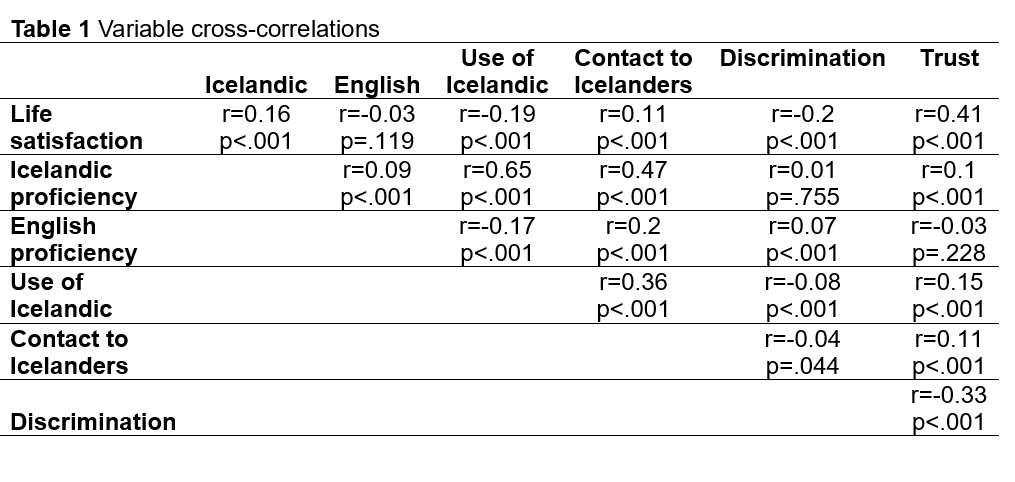
To further characterize the relation between satisfaction, trust, language use, and discrimination, we performed a Spearman correlation between the assessed variables; the coefficients are shown in Table 1.
Results
Recruited sample and exclusion of missing and ambiguous data
We obtained 2211 responses from immigrants in Iceland. After excluding participants who did not indicate their age (N=12) or gender (N=8), 10 participants were over 66 years old (5 female), 625 between 41 and 66 years old (407 female), 1284 between 26 and 40 years old (854 female), and 274 between 18 and 25 years old (193 female). Because the oldest group was small, we merged the two oldest groups.
As the focus of this study is on the experiences of first-generation immigrants whose language-learning journeys differ to second-generation immigrants, we excluded participants who participated as immigrants but have never lived elsewhere than in Iceland (N=13), and participants who did not indicate how long they had lived in Iceland (N=6), their income (N=62), age (N=12), gender (N=8), origin (N=7), or proficiency in Icelandic (N=19). Because some participants omitted more than one piece of this information, this resulted in a sample of N=2089, which we included in the further analyses.
We grouped participants who did not indicate their level of education (N=15) into the “other” education category.
Sample characteristics
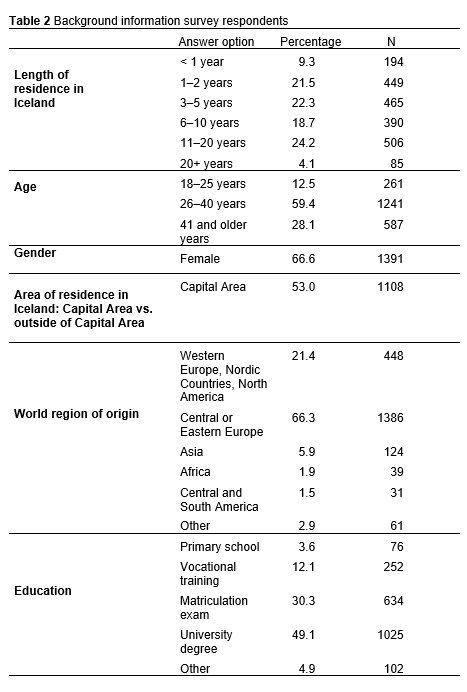
Table 2 provides background information on the included survey respondents.
Perceived community quality of life
Figure 1 shows the distribution of satisfaction with life among the immigrant population in the receiving municipality, demonstrating that 70% reported being very or rather satisfied with life in their municipality of residence. Appendix 1 shows participants’ reported level of perceived community quality of life with different aspects of life in their place of residence. Our combined satisfaction variable had a minimum of 9, a maximum of 35, a median of 23 and a mean of 23.1. We dichotomized the variable using a median split (values < 23 vs. values> 23).
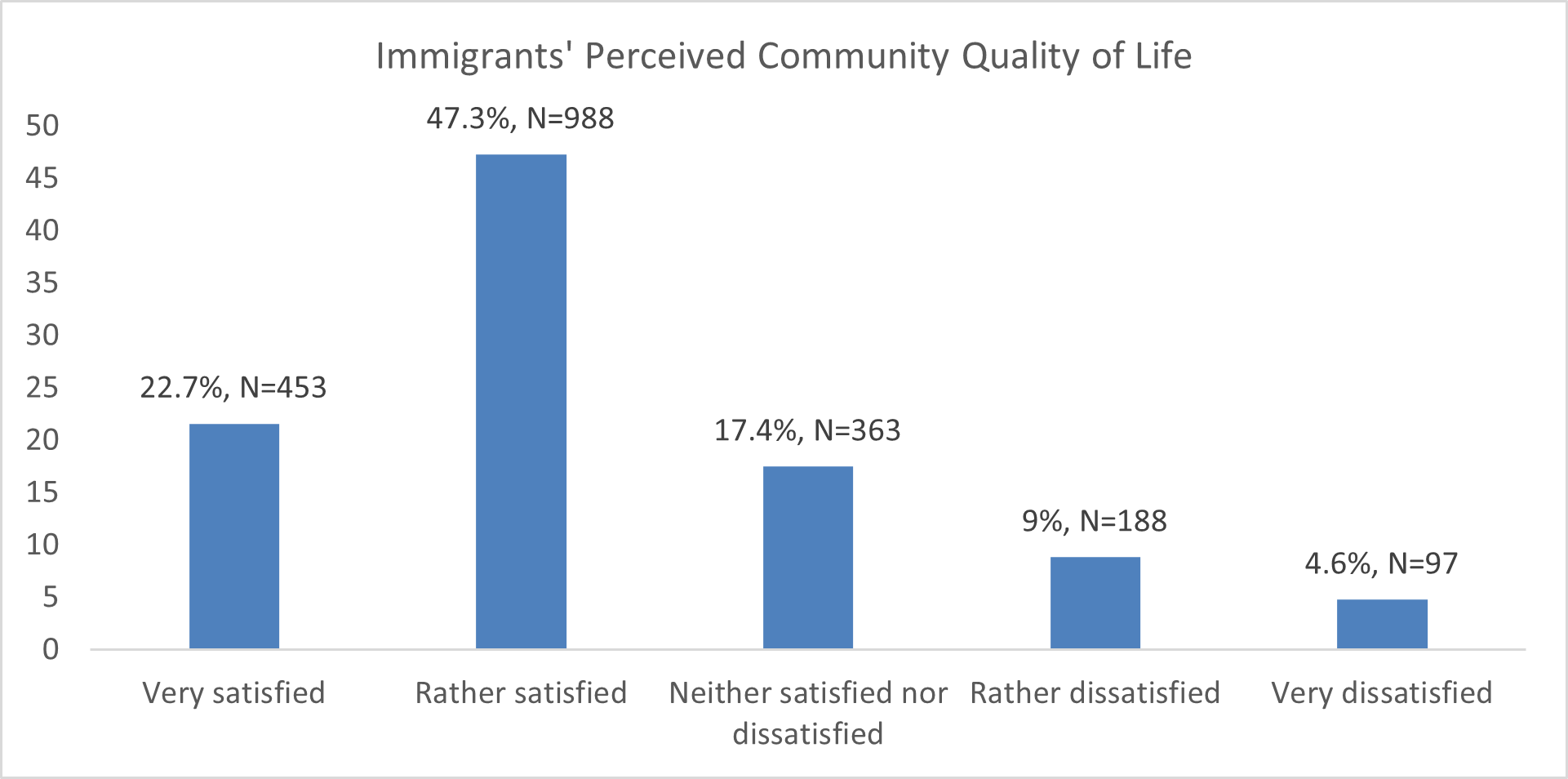
(Fig.1)
Table 3 provides background information on participants’ perceived community quality of life.
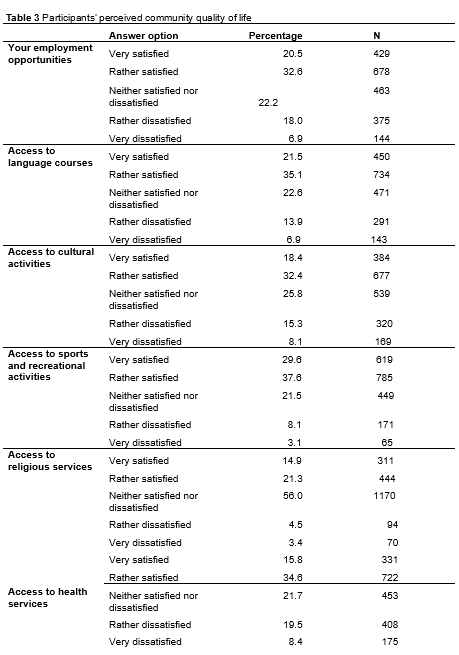
Table 4 shows participants’ linguistic profile.
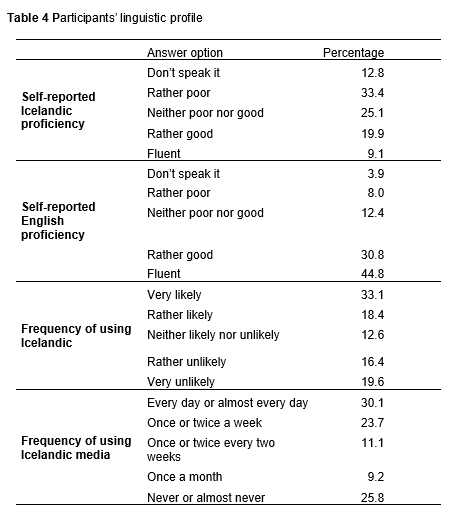
Table 5 shows participants’ involvement in the Icelandic labor market and Icelandic society.
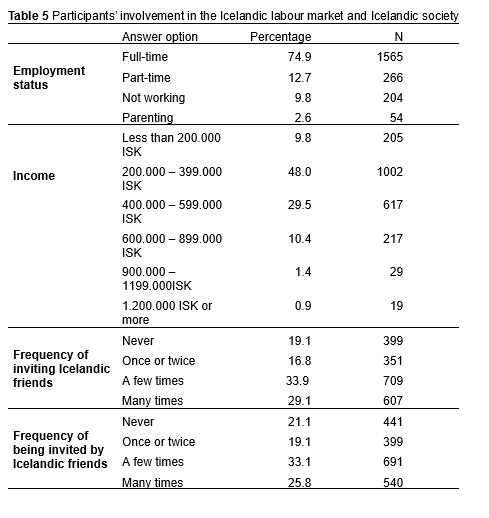
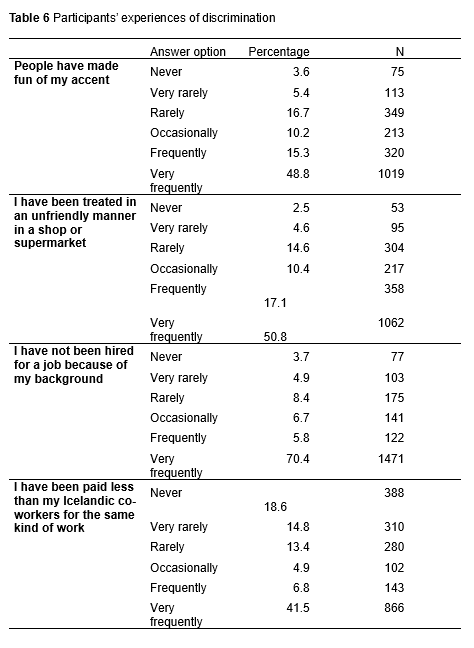
Table 6 shows participants’ experiences of discrimination
Trust in institutions in the receiving society
Our composite variable on trust in institutions in the receiving municipality amongst the immigrant population ranged from 6 to 30, with a median of 20 and a mean of 19.98. We dichotomized the variable using a median split (values < 20 vs. values > 20). Appendix 2 shows immigrants’ levels of trust in different institutions.
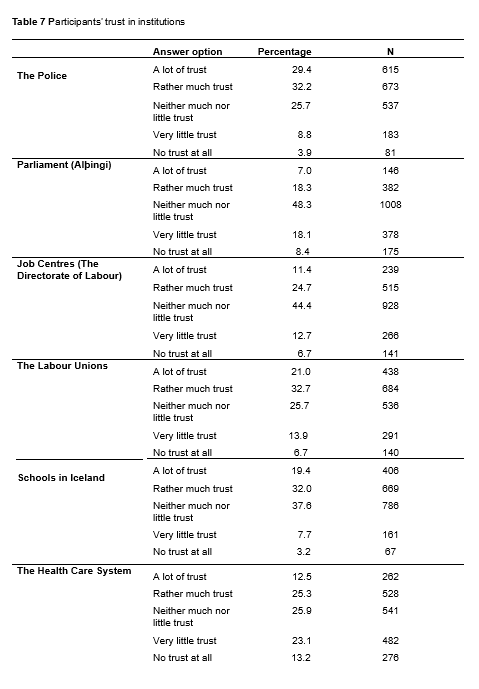
Table 7 provides background information on participants’ institutional trust.
Logistic regression for composite variable “perceived community quality of life”
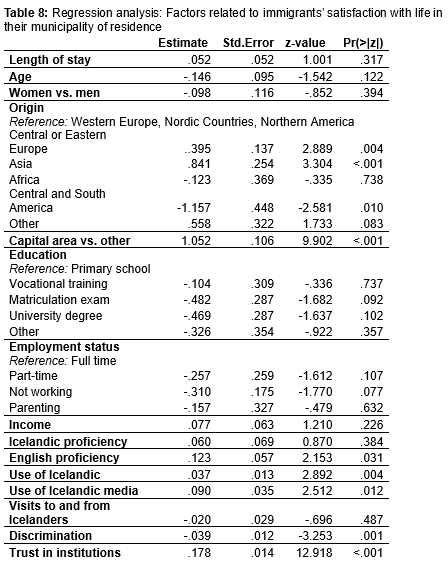
Table 5 shows the results of the logistic regression for factors moderating perceived community quality of life among immigrants in Iceland. The variables that had the strongest association with immigrants’ perceived community quality of life were area of residence and trust in institutions. Immigrants living outside the capital area of Iceland indicated a higher perceived community quality of life than those living in the capital area. Higher trust in institutions in Iceland was associated with higher perceived community quality of life. More experience of discrimination was associated with lower perceived community quality of life. More use of Icelandic media was associated with higher perceived community quality of life. Immigrants originating in Central or Eastern Europe as well as Asia were less satisfied with the quality of life in their communities of residence than those from Western Europe, Nordic countries, and Northern America, but those from Central and Southern America were more satisfied than those from Western Europe, Nordic countries, and Northern America. Those using Icelandic more frequently were more satisfied with the quality of life in their place of residence. Duration, age, gender, level of education, self-reported Icelandic proficiency, income, social contact to Icelanders, and employment, did not moderate satisfaction with community quality of life significantly. A trend that was not significant after correcting for multiple testing was observable for self-reported English-proficiency, where people with higher proficiency were more satisfied.
Logistic regression for trust in institutions in Iceland
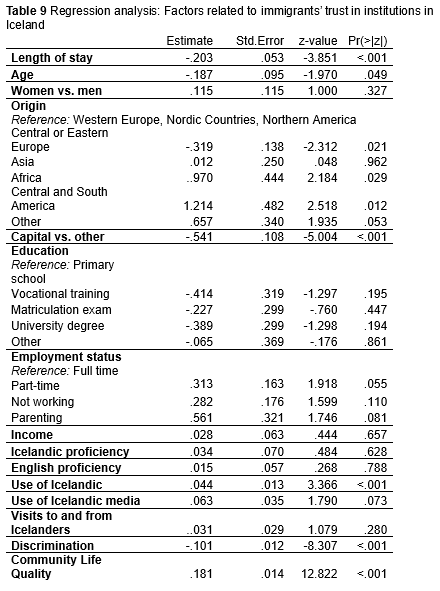
Table 6 shows the results of the logistic regression for factors moderating trust in institutions in Iceland. The variables that had the strongest association with trust in institutions in Iceland were length of stay, area of residence, experiences of discrimination, and community quality of life. A shorter stay was associated with lower trust in institutions in Iceland. More experiences of discrimination were associated with less trust in institutions in Iceland. Higher perceived community quality of life in Iceland was associated with greater trust in institutions. Immigrants living outside Iceland’s capital area showed less trust than those living in the capital area. Participants from Central and South America reported higher levels of trust, but participants from Central or Eastern Europe reported less trust in institutions in Iceland reported lower levels of trust than immigrants from the Nordic Countries, Western Europe, and North America. Frequent use of Icelandic was associated with more trust in institutions in Iceland. Age, gender, level of education, employment, income, self-reported Icelandic proficiency, self-reported English proficiency, and visits to and from Icelanders did not significantly moderate trust in institutions. A trend was observed: those using Icelandic media more frequently reported less trust in institutions, and immigrants from Africa expressed less trust in institutions than immigrants from Western Europe, Nordic Countries, and North America, but this effect was not significant after correcting for multiple testing.
Discussion
In this study, we investigate factors associated with immigrants’ perceptions of the quality of life in their community of residence and trust in institutions in the receiving society. We are particularly interested in how language skills in Icelandic and English and Icelandic use are associated with immigrants’ perceived quality of life and trust in institutions of the receiving society.
Our results show a positive association between immigrants’ perceived community quality of life and their trust in institutions of the receiving society, potentially showing the importance of linking social capital, “trust towards authority and formal institutions” (Chu et al., 2018, p. 474), for immigrants’ satisfaction with life in the receiving community. This association can be explained by the fact that when immigrants experience their local environment as safe and supportive, they are more likely to develop trust in the broader institutional structures (Chu et al., 2018). This trust can, in turn, enhance their sense of stability, belonging, and satisfaction with life in the receiving country (Chu et al., 2018).
Our findings indicate that it is an oversimplification of the integration process to declare language as the key to immigrants’ satisfaction with life and trust in institutions in receiving societies: Structural and societal factors (perceived discrimination, place of residence in Iceland, and length of stay) have a significantly stronger association with perceived community quality of life and institutional trust than language-related factors. Based on prior studies, we hypothesized a link between self-reported language policy and immigrants’ perceived quality of life in their communities of residence (Amit & Bar-Lev, 2015; Angelini et al., 2015; Choi et al., 2019). Our study confirms this assumption (Hypothesis 1) only when language skills are measured through language use rather than reported language proficiency. Self-reported language proficiency is not associated with immigrants’ perception of community quality of life and trust in institutions. However, more frequent use of Icelandic is positively associated with perceived community quality of life and trust in public institutions of the receiving country. This finding could be explained by the fact that language use is a more accurate way of measuring immigrants’ linguistic ability than self-reported language policy. Another finding pointing towards better language skills being associated with higher perceived quality of life is that more frequent consumption of Icelandic news and current affairs programmes is associated with higher community quality of life.
The opportunities provided by English could explain the limited role of Icelandic skills in immigrants’ perceived community of life and in their trust in institutions. In places where English is widely spoken, immigrants get by using a lingua franca rather than the local language (Henry, 2016). However, our findings do not confirm our hypothesis that self-reported English proficiency is associated with higher life satisfaction or trust in the receiving society (H2), suggesting that English proficiency is not a central factor for life satisfaction in our data.
Contrary to studies indicating that higher trust in political and public institutions is associated with lower skills in the receiving country language (Michelson, 2003; Röder & Mühlau, 2012), we find a positive association between language proficiency and trust in institutions, but only when it was measured through language use, not self-reported language proficiency. We, therefore, cannot confirm the assumption that better Icelandic skills are associated with lower institutional trust (Hypothesis 3). Furthermore, a longer stay in Iceland is associated with more trust in Iceland, which would also be evidence against the “integration paradox”, indicating that more integrated migrants turn away from their community of residence rather than towards it. However, we see a trend in the data, with those using Icelandic media more frequently reporting less trust in institutions, which would be in line with the theory of the ‘integration paradox’ (Röder & Mühlau’s, 2012) and also reflects earlier findings that immigrants with better Icelandic skills perceive more discrimination in the media (Ólafs & Zielińska, 2010). These findings suggest that the immigrants’ integration and inclusion in the receiving society is a multidimensional phenomenon, encompassing both exposure to the language and culture of the receiving society and critical awareness and engagement with immigrants’ place of residence. Whether and to what extent an “integration paradox” can be observed in Iceland would be a topic worth exploring in further research.
When immigration discourses focus overly on language as a sine qua non of integration (Simpson & Whiteside, 2015), little room is left for considering other factors. Indicators strongly related to perceived community quality of life and trust in institutions were perceived discrimination experiences and place of residence in Iceland, as well as trust in quality of life and trust in institutions, respectively. Experiencing discrimination was associated with lower perceived community quality of life and less trust in public and political institutions, confirming prior studies showing how negative experiences in the receiving society impact immigrants’ perceived quality of life, often more than other factors (Arpino & de Valk, 2017; de Vroome et al., 2014). There may be a mediating effect of language skills on perceived discrimination, as observed in other studies (Schaeffer & Kas, 2023; Verkuyten, 2016), but we do not find evidence of this in our data.
Participants residing outside the Capital Area of Iceland reported a higher community quality of life in their municipality of residence than those living in the Capital Area, which could be explained by the advantages of small communities reported by immigrants in other studies (Barillé, 2024). However, those living in the Capital Area showed greater trust in institutions than those living outside the Capital Area of Iceland, a finding that could have multiple explanations but cannot be addressed in the present article.
Our findings do not confirm our secondary hypotheses that an improved economic position was associated with more satisfaction with life in the receiving society, because income, employment, and education did not moderate life satisfaction or trust. This result contrasts with Rúnarsdóttir and Vilhjálmsson’s (2015) study among immigrant youth in Iceland, which showed that the main factor explaining the difference in life satisfaction between immigrants and natives was immigrants’ lower social status. We, therefore, cannot confirm our secondary hypothesis (H1.1) that immigrants’ economic position is positively associated with higher perceived community quality of life (Paparusso, 2019; Shen & Kogan, 2020).
Our findings further do not confirm our assumption that more social contacts to natives of the receiving society are associated with more life satisfaction (Arpino & de Valk, 2017; Wilkes & Wu, 2019) because we do not find that immigrants’ social contacts with Icelanders are associated with their life satisfaction and their level of trust in the receiving society. We therefore cannot confirm our secondary hypothesis (H1.2) that more frequent social contact with natives of the receiving society is associated with higher perceived community quality of life (Arpino & de Valk, 2017; Wilkes & Wu, 2019).
Our findings indicated differences in immigrants’ life satisfaction and trust across different countries of origin. We found that immigrants from Central or Eastern Europe, as well as from Asia, were less satisfied than those from Western Europe, Nordic countries, and North America. Participants from Central and South America reported higher levels of trust, but participants from Central or Eastern Europe reported less trust in institutions than immigrants from the Nordic Countries, Western Europe, and North America. Prior studies have shown that immigrants judge institutions “relative to the standards of their home countries” (Röder & Mühlau, 2012). This observation requires assessing the country of origin’s situation as an additional factor when estimating the influence of several variables on satisfaction and trust, leaving room for future research in this respect.
Limitations
Dichotomising the variables of interest (satisfaction and trust) makes it impossible to fully capture the full range of variance. However, we included multiple factors of different scales (nominal, ordinal, and interval), so logistic regression is the method of choice. It can furthermore be argued that self-reporting of language skills is an insufficient measure of language proficiency. However, this is also a well-established measure of language proficiency (Edele et al., 2015), allowing us to compare our findings with other studies using the same method. The self-reported proficiency reflects immigrants’ trust in their ability to communicate, which may be more important than a formal language examination. Finally, we included Icelandic use as an additional measure of language proficiency. Use of Icelandic is likely to be more closely related to objectively assessed language skills than self-reported proficiency, but also has more practical relevance than objective measurements of language competence. Internal consistency for the variables describing life satisfaction and discrimination was questionable, and the variable for trust was just acceptable, limiting the conclusions based on these variables.
Conclusion
Our findings encourage researchers and policymakers to consider that individual and structural circumstances, such as having experienced discrimination, have a stronger association with immigrants’ perceived community quality of life and trust in institutions than immigrants’ language skills in the language of the receiving society or the lingua franca English. Despite language skills undoubtedly impacting immigrants’ experiences and well-being in receiving societies, our studies demonstrate that it is necessary to examine how language skills intersect with other factors and consider additional factors, such as experiences of discrimination, which can be less visible and more difficult to measure than language skills. Our findings thus have far-reaching implications for studies of immigration scholars and immigration policymakers in Europe and internationally, particularly in places where English is widely spoken, as they provide insights into the reality of immigrants’ lives in these environments.
Declaration of conflicting interests
The authors declare that the research was conducted in the absence of any commercial or financial relationships that could be construed as a potential conflict of interest.
Author contribution
All three authors contributed significantly to the data collection and data analysis, as well as to writing and editing the document.
References
Amit, K., & Bar-Lev, S. (2015). Immigrants’ sense of belonging to the host country: The role of life satisfaction, language proficiency, and religious motives. Social Indicators Research, 124(3), 947–961. https://doi.org/10.1007/s11205-014-0823-3
Angelini, V., Casi, L., & Corazzini, L. (2015). Life satisfaction of immigrants: Does cultural assimilation matter? Journal of Population Economics, 28(3), 817–844. https://doi.org/10.1007/s00148-015-0552-1
Arcand, S., Facal, J., & Armony, V. (2020). Understanding the integration process through the concept of trust: A case study of Latin American professionals in Québec. Journal of International Migration and Integration, 22(2), 749–767. https://doi.org/10.1007/s12134-020-00765-2
Ballarino, G., & Panichella, N. (2018). The occupational integration of migrant women in Western European labour markets. Acta Sociologica, 61(2), 126–142. https://doi.org/10.1177/0001699317723441
Barillé, S. (2024, April). The promise of Iceland: An ethnography of happiness among transnational parents (Doctoral dissertation, University of Iceland, School of Social Sciences, Faculty of Sociology, Anthropology and Folkloristics). Opin vísindi. https://opinvisindi.is/handle/20.500.11815/4820
Berggren, N., & Bjørnskov, C. (2020). Institutions and life satisfaction. In K. Zimmermann (Ed.), Handbook of labor, human resources and population economics. Springer.
Björnsson, D. F., Kopsch, F., & Zoega, G. (2018). Discrimination in the housing market as an impediment to European labour force integration: The case of Iceland. Journal of International Migration and Integration, 19(3), 829–847. https://doi.org/10.1007/s12134-018-0574-0
Choi, I., Choi, H., Lim, J., et al. (2019). Predictors of life satisfaction among multicultural African families in South Korea. Journal of Psychology in Africa, 29(1), 7–12. https://doi.org/10.1080/14330237.2019.1569301
Chu, Y., Shen, C., & Yang, J. (2018). Country-level bonding, bridging, and linking social capital and immigrants’ life satisfaction. Applied Research in Quality of Life, 13(3), 745–759. https://doi.org/10.1007/s11482-017-9556-1
Diener, E., Emmons, R. A., Larsen, R. J., & Griffin, S. (1985). The satisfaction with life scale. Journal of Personality Assessment, 49(1), 71–75. https://doi.org/10.1207/s15327752jpa4901_13
Edele, A., Seuring, J., Kristen, C., & Stanat, P. (2015). Why bother with testing? The validity of immigrants’ self-assessed language proficiency. Social Science Research, 52, 99–123. https://doi.org/10.1016/j.ssresearch.2014.12.017
Fernandez, D., Liu, I., & Costilla, R. (2019). A method for ordinal outcomes: The ordered stereotype model. International journal of methods in psychiatric research, 28(4), e1801. https://doi.org/10.1002/mpr.1801
Government of Iceland, Ministry of Social Affairs and Labour. (2023). Green paper on the matters of immigrants and refugees – Status assessment and strategic options. https://www.stjornarradid.is/efst-a-baugi/frettir/stok-frett/2023/11/27/Graenbok-um-malefni-innflytjenda-komin-ut-a-polsku-og-ensku/
Government of Iceland, Ministry of Social Affairs and Labour. (2024). A society for everyone: Iceland’s future and policy on matters of immigrants. https://stjornarradid.is/library/02-Rit–skyrslur-og-skrar/A_Society_for_Everyone_Iceland’s_future_and_policy_on_matters_of_immigrants_Draft_policy_to_2038.pdf
Henry, A. (2016). Swedish or English? Migrants’ experiences of the exchangeability of language resources. International Journal of Bilingual Education and Bilingualism, 19(4), 442–463. https://doi.org/10.1080/13670050.2015.1008979Hoffmann, L., Innes, P., Wojtyńska, A., & Skaptadóttir, U. D. (2021). Adult immigrants’ perspectives on courses in Icelandic as a second language: Structure, content, and inclusion in the receiving society. Journal of Language, Identity & Education, 23(2), 304–319. https://doi.org/10.1080/15348458.2021.1988855
Hoffmann, L., & Holm, A. E. (2025). ‘Guardians of the language’: Language ideologies and migrants’ language learning experiences in Iceland and the Faroe Islands. Journal of Multilingual and Multicultural Development, 1–14. https://doi.org/10.1080/01434632.2025.2472879
Kaasa, A., & Andriani, L. (2022). Determinants of institutional trust: The role of cultural context. Journal of Institutional Economics, 18(1), 45–65. https://doi.org/10.1017/S1744137421000199
Leonardi, M. M. V. (2020). “I hardly ever practice the real Standard German”: Self-reported language use and language proficiency in South Tyrol (Italy). Linguistik Online, 102(2), 83–98.
Lindner, K., Hipfner-Boucher, K., Yamashita, A., et al. (2020). Acculturation through the lens of language: Syrian refugees in Canada and Germany. Applied Psycholinguistics, 41(6), 1351–1374. Cambridge University Press. https://doi.org/10.1017/S0142716420000454
Michelson, M. R. (2003). The corrosive effect of acculturation: How Mexican Americans lose political trust. Social Science Quarterly, 84(4), 918–933. Blackwell Publishing. https://doi.org/10.1046/j.0038-4941.2003.08404017.x
OECD (2024), Skills and Labour Market Integration of Immigrants and their Children in Iceland, Working Together for Integration, OECD Publishing, Paris, https://doi.org/10.1787/96adc300-en.
Ólafs, H., & Zielińska, M. (2010). I started to feel worse when I understood more: Polish immigrants and the Icelandic media. Þjóðarspegillinn, XI, 76–85.
Paparusso, A. (2019). Studying immigrant integration through self-reported life satisfaction in the country of residence. Applied Research in Quality of Life, 14(2), 479–505. Springer. https://doi.org/10.1007/s11482-018-9624-1
Ragnarsdóttir, B., Bjarnadóttir, V. S., Hjálmsdóttir, A., & Þrastardóttir, B. (2024). Konur af erlendum uppruna í íslensku velferðarsamfélagi: Staða á vinnumarkaði, félagsleg tengsl og líðan. Íslenska þjóðfélagið, 15(1).
Putnam, R. D. (2000). Bowling alone: The collapse and revival of American community. Simon & Schuster.
Rúnarsdóttir, E. M., & Vilhjalmsson, R. (2015). Ethnic differences in youth well-being: The role of sociodemographic background and social support. Scandinavian Journal of Public Health, 43(6), 580–587. SAGE. https://doi.org/10.1177/1403494815588644
Shen, J., & Kogan, I. (2020). Immigrants’ relative income and life satisfaction: Comparison groups from a multi-generational perspective. Acta Sociologica, 63(1), 82–102. SAGE. https://doi.org/10.1177/0001699319859397
Simpson, J., & Whiteside, A. (2015). Adult language education and migration. Taylor & Francis. https://doi.org/10.4324/9781315718361
Skaptadóttir, U. D., & Innes, P. (2017). Immigrant experiences of learning Icelandic and connecting with the speaking community. Nordic Journal of Migration Research, 7(1), 20–27. De Gruyter Open. https://doi.org/10.1515/njmr-2017-0001
Statistics Iceland. (2019). Individuals’ total annual income around 6.6 million ISK in 2018. https://www.statice.is/publications/news-archive/wages-and-income/income-2018-tax-returns/
Statistics Iceland. (2021). Immigrants 15.5% of the population of Iceland. https://statice.is/publications/news-archive/inhabitants/population-by-origin-1-january-2021
Statistics Iceland. (2024). Population by sex and age 1841–2024. https://px.hagstofa.is/pxen/pxweb/en/Ibuar/Ibuar__mannfjoldi__1_yfirlit__yfirlit_mannfjolda/MAN00000.px
Tip, L. K., Brown, R., Morrice, L., et al. (2019). Improving refugee well-being with better language skills and more intergroup contact. Social Psychological & Personality Science, 10(2), 144–151. SAGE. https://doi.org/10.1177/1948550617752062
Vilhelmsdóttir, S., & Kristinsson, G. H. (2018). Political trust in Iceland: Performance or politics? Stjórnmál og stjórnsýsla, 14(1), 211–234. https://doi.org/10.13177/irpa.a.2018.14.1.10
Wilkes, R., & Wu, C. (2019). Immigration, discrimination, and trust: A simply complex relationship. Frontiers in Sociology, 4, Article 32. https://doi.org/10.3389/fsoc.2019.00032
Wojtyńska, A., & Zielińska, M. (2010). Polish migrants in Iceland facing the financial crisis. In Þjóðarspegillinn 2010: Ráðstefna í félagsvísindum (pp. 1–11). https://skemman.is/handle/1946/6771